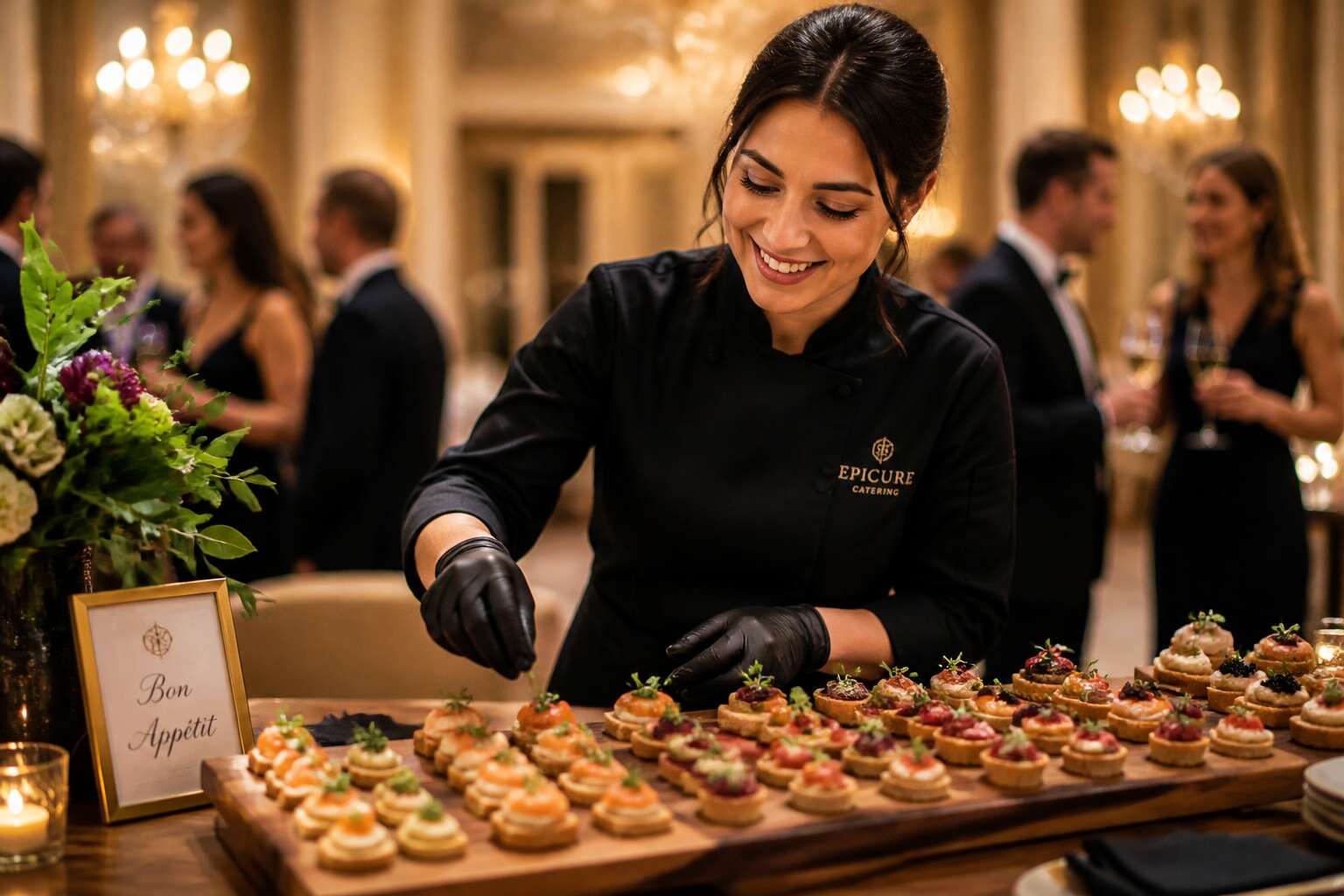
Understanding the Modern Event Dining Landscape
Evolution of Guest Expectations in the Digital Age
The modern event dining landscape has transformed in ways that would have stunned even the most forward-thinking host a decade ago. South African guests now arrive with phones raised, ready to document every canapé and pour. A single negative online review can outweigh a hundred satisfied whispers! This is the reality that hospitality and catering services must now navigate.
Expectations have become explicit requirements. Consider the emerging standards where once there were merely preferences:
- transparent sourcing of local ingredients, with names and farms attached;
- dietary restrictions addressed before the first greeting at the door;
- visual presentation that carries the same weight as flavour in social sharing.
Hospitality and catering services that embrace this digital consciousness earn more than applause. They earn relevance in a landscape where the guest’s memory is no longer the only record of the occasion.
Distinguishing Between Venue-Based and Independent Catering Models
Across South Africa, the assumption that a venue’s kitchen is the only option has vanished. Planners weigh two distinct approaches: venue-based catering, where the property supplies everything, and independent catering, where a mobile team brings the operation to the site.
Venue-based models offer convenience and a single point of contact. Independent models provide flexibility, often with more competitive pricing per head. The real difference lies in accountability, and it is stark! A venue can shift blame to its chef; an independent caterer is accountable for every plate.
For hospitality and catering services, this split reshapes contracts and staffing. Venue teams stay on site year round; independent crews build reputations meal by meal.
- Venue-based: fixed overheads, limited customisation.
- Independent: scalable, but requires recces and permits.
Both models serve genuine purposes. Hospitality and catering services must adapt accordingly. The key is knowing which one your event demands before you sign!
The Rise of Dietary-Conscious Menu Engineering
Menus now double as social documents. A 2023 South African dining survey found that nearly 68 percent of event guests expect at least one structured dietary path, whether plant-based, halaal, or gluten-free. Chefs in hospitality and catering services respond with menu engineering that treats dietary needs as design parameters rather than last-minute substitutions.
This shift rewires kitchen logistics. A dish is built around its constraints from the outset. Consider the new staples:
- Fermented and cultured bases that add depth without dairy.
- Ancient grains chosen for texture and resilience on a buffet line.
- Separate prep zones mapped into the kitchen flow before service begins.
The result is a dining experience where no guest feels like an afterthought. Planners who understand this landscape sign contracts with clearer eyes.
Sustainability and Sourcing Transparency as Core Values
A 2024 survey by the Southern African Catering Association found that 71 percent of event clients verify sourcing claims before signing contracts. Sustainability in the modern event dining landscape has become a matter of provenance, a paper trail stretching from a Karoo farm gate to a Johannesburg platter. That scrutiny reshapes how hospitality and catering services negotiate with suppliers.
We see chefs signing seasons-long contracts with farmers, tracking rainfall and soil health alongside plate costs. Transparency means carrots arrive with a name attached, not a vague label. Sourcing transparency involves:
- Menus that identify the farm, the town, and the grower
- Supplier lists shared openly with guests on request
- Waste streams that return to the earth through composting partnerships
Guests rarely accept ‘locally sourced’ as a complete answer anymore. They want the farm’s name, the town’s name, the proof. Hospitality and catering services that supply that proof earn the booking!
Crafting a Winning Operational Framework
Logistics and Supply Chain Management
The dining room glows with candlelight, yet the true spectacle occurs far from the guest’s eye. Behind the polished silver and folded linen lies a machinery of movement, a choreography of supply that determines success long before the first course is served. To master hospitality and catering services, one must treat the supply chain as a living organism, prone to fever and fatigue if neglected. It is not enough to have a beautiful menu; the ingredients must arrive like clockwork, and the equipment must be where it is needed, precisely when it is needed.
Within this operational framework, time becomes the most precious commodity. Every minute lost to a delayed delivery echoes in the quality of the plate. This discipline involves several critical variables:
1. The timing of perishable goods, coordinated to the hour.
2. Route planning for transport, avoiding the congestion of the Johannesburg grid.
3. The rotation of stock, ensuring no ingredient ever meets its quietus in a cold storage room.
4. The coordination between the front of house and the kitchen brigade.
A breakdown in this order is a spectre that haunts every event. The silent work of inventory management builds a fortress against waste, yet it requires a certain paranoia about the future. I have seen kitchens where the ledger is a holy text, and the storeroom is a sanctuary where order must remain absolute. Sourcing strategies also shift, favouring local suppliers in the Cape who offer resilience against the volatility of global ports. This commitment to local reliability offers a stability that the long-distance haul cannot provide.
Ultimately, the seamless delivery of a plate is the result of this engineered silence. The guest should never hear the frantic calls or the hiss of a faltering generator. They should only taste the calm. For venues from Durban to the Winelands, the operational framework is a quiet promise, one that is only broken when the machinery of logistics begins to groan. It is a constant vigil, an art of anticipation where every step is a calculated move in a dark and delicate dance.
Staffing Models: From Permanent Teams to On-Demand Talent
One missed shift can unravel a wedding reception. Staffing models decide the outcome before the first course leaves the pass. Permanent teams bring institutional memory. They know the kitchen layout, the floor plan, the regulars. On-demand talent offers flexibility without the payroll drag.
The hybrid model works best for South African caterers facing seasonal surges. A core team handles the weekly rhythm. Casual workers cover the big weekends. This distribution of labour determines the reliability of hospitality and catering services.
The roster often looks like this:
- A permanent head chef and two sous.
- An events coordinator who knows the venues.
- A pool of trained waiters, called on demand.
This structure lowers costs while keeping quality stable. The balance between loyalty and adaptability is the operational frontier for hospitality and catering services.
Kitchen Safety and Hygiene Compliance Standards
On a busy Saturday in Cape Town, a single cross-contamination event can close a kitchen for days. The operational framework for hospitality and catering services rests on hygiene compliance standards that leave nothing to chance.
Temperature logs matter more than the tasting spoon. Colour-coded chopping boards carry more weight than the kitchen’s reputation. In South African catering, the Occupational Health and Safety Act sets the baseline; client expectations demand considerably more.
This framework structures daily checks:
- Cold storage temperatures at every shift change
- Handwash station supplies and soap levels
- Sanitiser dilution ratios for contact surfaces
- Pest control logs and bait station records
Cleanliness becomes the quiet promise behind every plated dish, the invisible layer guests may never see but always trust.
Inventory Management and Cost Control
Inventory management separates profitable catering operations from those that lose money each month. In South Africa’s hospitality and catering services, food costs consume thirty to forty percent of revenue. Weekly stock counts reveal patterns, yet daily purchasing decisions carry the real weight.
Par levels must reflect actual service demand, not supplier pressure. Menu engineering data should drive every order, from perishable produce to bulk dry goods. We see kitchens stumble when they order on habit rather than evidence.
- First in, first out rotation at every storage point
- Monthly variance reports against theoretical usage
- Supplier price comparisons every quarter
Cost control demands vigilance. When margins tighten, the kitchen that tracks every rand survives.
Technology Integration for Order and Delivery Coordination
In the South African catering landscape, order flow often breaks between the sales call and the kitchen pass. A winning operational framework relies on technology as the coordination layer, not a luxury add-on. Orders arrive through WhatsApp, email, and phone calls, so they demand a single digital point of control. Cloud-based dispatch systems route deliveries by zone and load capacity, reducing fuel spend and tightening delivery windows.
Consider the baseline standards every catering operation should enforce:
- Digital order confirmations with timestamped acknowledgements
- Live driver tracking for high-value corporate functions
- Automated invoice generation tied to delivery sign-off
These integrations give hospitality and catering services a precise line of sight from client enquiry to final plate. The kitchen responds to real demand, staff coordinate from one dashboard, and clients receive certainty instead of guesswork.
Marketing Your Culinary Brand Effectively
Building a Robust Online Presence with Visual Storytelling
When a wedding couple scrolls through their phone, they decide with their eyes first. For hospitality and catering services in South Africa, a robust online presence shapes whether those thumbs pause. Visual storytelling is the initial point of contact!
The steam rising from a pot, the hands plating a dish, the dust settling on a vineyard table. In our experience, these details build recognition. Consistent lighting and a clear colour palette across your website and social feeds achieve the same without lengthy explanations.
- Short video clips of preparation in real time
- Behind the scenes of a Cape Winelands setup
- High resolution stills of finished tablescapes
The feed itself becomes part of the service. For hospitality and catering services, an uncluttered and purposeful presentation has the same importance as the plated dish.
Leveraging Reviews and Testimonials for Social Proof
Word of mouth has always been the lifeblood of this industry. In the digital era, that mouth now types public reviews. For hospitality and catering services, testimonials act as a direct line to undecided clients. A single detailed review can settle a nervous couple’s choice before they ever contact you. But collecting praise is only half the work. You have to put it where it matters.
Consider these practical approaches:
- Request feedback within 48 hours of the event
- Respond to every review, even critical ones
- Showcase existing client stories with permission
Fresh testimonials carry more weight than a glowing page from years ago. When your team shares specific moments, like how you handled a sudden dietary switch or navigated a windy garden setup, readers see your competence. That evidence builds trust faster than any polished description of your menu.
Networking with Event Planners and Corporate Clients
Just over half of corporate event planners in South Africa book their caterers through a pre-approved vendor list. Getting onto that list requires more than a good tasting menu. It requires a deliberate campaign of relationship building with the people who control the venue budgets.
The first step is to understand the calendar. Planners work on a seasonal cycle. They finalise menus for the December conferencing rush by August. Approach them in Q1 and Q2, when their schedules are less frantic. Offer to host a small, informal tasting at your kitchen or a hired space. Make the event about their needs, such as dietary complexities for large groups or the logistics of a multi-day summit.
Personality fit matters in this segment. Corporate clients rarely change their hospitality and catering services provider after a successful annual gala. They want a partner who communicates clearly. To build that rapport, you must speak their language. Financial officers care about cost-per-head projections. Event managers care about wristbands and meal timings. Demonstrate your fluency in both.
Networking does not end at the handshake. Follow up within two days, but add value in the follow-up. Send a brief recap of the menu concepts you discussed and a single case study from a similar event you handled. Planners are drowning in generic brochures. Specificity cuts through the noise.
Your online footprint supports this effort. A planner will look you up before meeting you. A website that loads slowly or lacks a clear contact form undermines your first impression. Invest in a clean, functional site that lists the types of events you service, including corporate functions and private galas.
Here are three practical steps to secure more corporate work:
1. Join the Southern African Association for the Conference Industry and attend their local chapter meetings.
2. Offer a referral commission to venue managers who recommend your hospitality and catering services.
3. Create a one-page document that outlines your staffing ratios and backup plans for equipment failure.
These actions signal professionalism. They show you understand that a corporate client is not booking a meal, they are booking a risk mitigation strategy. Your willingness to discuss contingency plans is often the decisive factor. The goal is to be seen as the safest pair of hands in the room. When a planner walks into their weekly status meeting and the CEO asks about the menu for the board retreat, the planner needs to feel confidence in your name. That confidence is built in the quiet months, long before the first tray is passed. The best conversations happen over coffee, not just at high-stakes presentations, and they happen consistently.
Seasonal Promotions and Package Customization
Seasonal shifts change what clients crave. A July conference needs heartier stews, while a February garden party calls for fresh citrus and light proteins. Tailor your hospitality and catering services to the calendar, and you become the obvious choice for every occasion.
Package customization begins with listening. A wedding couple may want a grazing table only. A corporate launch might need three tasting stations. Build flexible tiers that allow clients to swap items without losing cohesion.
- Pair local produce with the season’s narrative
- Offer early booking rates for winter events
- Create add-ons like mini dessert bars or cocktail infusions
Human connection seals the deal. I always call a client three weeks before their event to adjust portions and refresh the menu. That personal touch turns a transaction into a partnership.
Optimizing for Local Search and Voice Queries
When a guest asks their phone for the best caterer in Cape Town, your name should arrive before coffee cools. Local search is the new word of mouth. Optimizing means claiming your Google Business Profile and keeping your name, address, and phone number identical across every directory. Voice queries alter the approach. People speak in full sentences, so your content should answer natural questions like where to find hospitality and catering services nearby.
Consider how your menu sounds when read aloud. A voice search for a winter wedding pulls from reviews and FAQs, not your homepage.
- Keep your operating hours current on every platform
- Mention your suburbs and landmarks in your copy
- Publish answers to common client questions
This precision does more than attract algorithms. It signals that you understand a client’s context and neighbourhood. In South Africa, reputation travels by recommendation, and local clarity becomes your strongest advantage.
Referral Programs and Partner Incentives
Referrals determine success in hospitality and catering services. A satisfied client who recommends you carries more weight than any paid advertisement. Yet most businesses leave this momentum to chance.
Partner incentives change that. Offer event planners a commission for every confirmed booking. Give venues a reason to mention your menu first. These are not handshakes; they are contracts with a payoff.
Here’s what works:
- A tiered reward system for repeat referrers
- Complimentary tastings for corporate partners
- Early access to seasonal menus for loyal clients
I’ve seen too many caterers ignore this. Track every referral source. Measure what converts. Then focus on what delivers. In South Africa, relationships drive the industry, and a structured program turns goodwill into growth.
Navigating Regulations and Risk Management
Food Safety Certification and Licensing Requirements
A single missing Certificate of Acceptability can undo months of client trust, yet many operators treat it as an afterthought. Navigating South Africa’s licensing landscape for hospitality and catering services requires vigilance, not paperwork alone.
Risk management begins before the first service. Health inspectors examine sanitation records, pest control logs, and staff training files. I’ve seen successful chefs lose contracts because their food safety certification lacked proper renewal dates.
Operators should maintain:
- Certificate of Acceptability from the local municipality
- Food safety certification aligned with R638 regulations
- Public liability insurance for offsite events
These elements form operational discipline and turn compliance into a competitive advantage.
Insurance and Liability Coverage Essentials
In South Africa, a single liability claim can exceed R1 million, yet many independent caterers operate without coverage. That is a dangerous gamble! Insurance is not a luxury; it is a contractual necessity for hospitality and catering services. Event venues increasingly demand proof of public liability before confirming a booking, and corporate clients audit policies during procurement.
Risk management extends beyond the kitchen floor; offsite events introduce variables like transport, third-party equipment, and temporary staff, each creating exposure. Operators should review their policies annually, paying attention to exclusions for foodborne illness and property damage. Umbrella coverage can bridge gaps between separate policies.
- Public liability for bodily injury and property damage
- Product liability for contaminated food
- Employer’s liability for temporary and permanent staff
Without these layers, one incident can dissolve years of reputation. For hospitality and catering services, insurance with proper documentation signals professionalism rather than a defensive afterthought.
Handling Allergies and Crisis Communication
A single undeclared peanut can shut down an event faster than load shedding. I have watched strong kitchens stumble on allergen communication. Build an allergen matrix for each dish. Brief front-of-house staff before every service. Document guest dietary conversations in writing. That paper trail matters when regulations tighten.
When a reaction or complaint escalates, silence makes things worse. Follow these steps:
- Assign one spokesperson.
- Draft a holding statement within the hour.
- Log every detail for your insurer.
For hospitality and catering services, a calm, documented response protects your business.
Contract Negotiation and Deposit Policies
The fine print in a catering contract has a way of revealing itself only after the candles are blown out. In South Africa, where load shedding has made contingency clauses almost as important as the menu itself, hospitality and catering services live or die by their deposit policies. A 50% non refundable deposit is not greed; it is the difference between a kitchen that can prep and a ledger that bleeds.
Negotiate cancellation windows with real teeth. Define force majeure precisely, because grid failure is not an act of God, it is a certainty. Risk management means knowing which clauses protect you and which expose you to a client who vanishes with the first cold front.
- Include a minimum spend clause for venue hire.
- Stipulate payment deadlines for final headcounts.
- Secure indemnity for third party vendors.
Without these, the contract is just a promise wearing a suit. Strong deposit policies keep hospitality and catering services solvent when the weather turns, and the client turns with it.
Enhancing the Client Experience from First Contact to Follow-Up
Consultation and Tasting Session Best Practices
The experience begins long before the first course arrives. In hospitality and catering services, the initial enquiry deserves a response within the hour. Speed signals respect. When we move to the consultation, listening matters more than speaking. Ask about the grandmother’s recipe, the uncle’s dietary restrictions. These details shape the menu. Tasting sessions invite clients to experience the food directly. Present each dish with its provenance and story. Watch their faces during the first bite!
A simple checklist guides our follow-up:
- Send a written summary within 48 hours
- Confirm dietary requirements in writing
- Share a timeline for the next steps
The follow-up consultation should feel personal. That rapport transforms a single booking into enduring loyalty, and it sustains repeat business for any hospitality and catering services operation.
Customization Options for Themed and Cultural Events
When a client requests a themed celebration, the first contact sets the tone. For hospitality and catering services, that initial conversation should uncover the cultural touchpoints that matter. Ask about music, decor, and ceremonial dishes. These details transform a generic menu into a story.
Follow-up is where customization deepens. After the tasting, we refine the plan based on their feedback. We consider regional South African flavours, from Cape Malay to Zulu influences.
- Build a spice profile around family traditions
- Adjust serving styles to match the event’s formality
- Include symbolic dishes that honour the occasion
That level of attention turns a single booking into a referral. Hospitality and catering services thrive when clients see their heritage reflected on the plate.
On-Site Service Etiquette and Guest Interaction
Some clients remember the first phone call longer than the final course. For hospitality and catering services in South Africa, that initial interaction sets the expectation. We listen for the pauses, the hesitation, the excitement. Every detail from dietary needs to seating preferences gets logged before the contract lands.
On the event day, etiquette shifts from planning to presence. Staff should greet each guest as if the entire reputation rests on that single moment. Eye contact, a gentle tone, and precise timing matter more than any garnish. We train our team to read the room, to notice an empty glass from across the floor.
We make a follow-up call within 48 hours. We ask what worked, what felt awkward. That feedback fuels our next booking. Hospitality and catering services grow when clients feel heard and served.
Post-Event Feedback Collection and Loyalty Building
The first email sets expectations, but the relationship develops long after the last plate is collected. For hospitality and catering services, loyalty grows from memory, not from reward programs. We log every preference from the initial inquiry through the post-event debrief, then use that data to anticipate returning clients.
Simple gestures create lasting impressions:
- A handwritten thank you note within the week.
- A small discount on the next booking, offered unprompted.
- A curated photo selection with a personal caption.
The follow-up call is a timing check, not a formality. We ask which courses landed and which moments felt flat. Then we adjust our menus and service training accordingly. Hospitality and catering services become a continuous relationship, where each event informs the next.
Handling Last-Minute Changes and Special Requests
The call comes in at 14:47, thirty hours before the event. The client’s aunt has a severe gluten allergy, unmentioned in the original brief. The menu is set, the prep list is printed, and the venue has confirmed the headcount. This is the moment where many hospitality and catering services begin to unravel.
We treat these requests as a test of our systems, not our patience. A flexible prep schedule is our first line of defense. We keep component parts separate, allowing for rapid substitution without cross contamination. Our chefs maintain a small reserve of alternative ingredients for exactly this scenario.
Our service team operates with a quiet fluidity that anticipates these shifts:
– We maintain direct radio contact between the floor and the kitchen during service.
– We print place cards with dietary markers that are discreet but visible to staff only.
– We prepare a backup protein and a gluten free sauce option daily, regardless of the menu.
This approach turns a potential crisis into a seamless adjustment. The client sees a team that simply handles it. They do not see the revised prep sheets or the extra five minutes of staff briefing.
The real craft of hospitality and catering services lies in this adaptability. The first contact sets the tone, but the response to the unexpected defines the relationship. We never promise perfection; we promise precision under pressure. That distinction is what earns the next booking, long before the follow up call is made.
Growth Strategies for Scaling Your Operation
Expanding Service Areas and Venue Partnerships
Expanding your footprint in South Africa’s hospitality and catering services sector is less about brute force and more about clever geography. We have seen operators double their reach simply by partnering with boutique wine farms and unconventional event spaces that lack in-house kitchens.
Venue partnerships let you scale without leasing new kitchens. You bring the cooking equipment and staff, they supply the space. Before signing, verify load shedding schedules, water access, and whether the venue’s insurance covers your staff. A beautiful venue with no prep space is a problem.
- Locations within a two hour drive of your central kitchen
- Owners who understand seasonal demand peaks
- Sites with existing refrigeration and backup power
For hospitality and catering services, scaling across regions requires a depot strategy. Keep one central kitchen, then establish cold storage hubs in new areas. This cuts last mile costs and lets you accept bookings further afield without sacrificing quality.
Introducing Corporate and Institutional Accounts
Corporate and institutional accounts change the financial shape of a catering business. One-off weddings and private galas carry excitement, but recurring contracts with schools, banks, and corporate campuses bring dependable monthly revenue. This stability lets you plan staffing and purchasing with far greater certainty, a luxury many hospitality and catering services never enjoy.
Procurement managers in this segment evaluate suppliers on consistency and compliance. For hospitality and catering services, the move into institutional work demands a different sales posture. Prepare a pilot offering for their staff canteen or executive boardroom, then track performance tightly.
- Contract terms and minimum monthly volumes
- Menu rotation schedules and dietary standards
- Delivery windows that match shift patterns
Assign a dedicated account manager to each institutional client. That person monitors feedback, adjusts portion sizes, and resolves disputes quickly. Institutional buyers value reliability above flair, and their procurement scorecards reflect that priority.
Upselling Additional Services: Bartending, Staffing, Rentals
Scaling a catering business rarely means working harder; it means working smarter with the clients you already have. The real goldmine is the existing contract client, the one who already trusts your hospitality and catering services. Upgrading that relationship through additional services creates a compounding effect that is far more profitable than chasing new business. Think of it as deepening your roots instead of spreading thin seeds.
One of the simplest ways to expand is to offer a complete staffing package alongside your food. A client booking a seated dinner might also need servers, a bartender, or a crew for setup and breakdown. Instead of referring them to a separate agency, you supply the talent yourself. This captures revenue that often escapes your grasp and solidifies your position as a one-stop operator.
Rentals follow a similar logic. You are already delivering food to a venue, so adding tables, chairs, or glassware onto that truck is pure efficiency. It removes friction for the client and increases your invoice without a major spike in effort.
To keep these extras profitable, review your margins regularly. Consider bundling services into tiered packages to encourage upgrades. Track which clients consistently add services and which ones rarely do, then tailor your pitch accordingly.
The financial argument is compelling. Every additional service you provide to a current client cuts acquisition costs dramatically. Existing customers understand your hospitality and catering services, so they are quicker to say yes to a proposal. They skip the consultation phase and move straight to signing.
Upselling becomes a strategic muscle. You are not just selling more; you are building a moat around your business. A client who relies on you for food, staff, and rentals is far less likely to switch to a competitor for a small price difference. They become invested in your success.
It also improves your operational leverage. Your delivery vehicles already run a route, and your head chef already plans the menu. Adding rental coordination or bartender scheduling uses that existing infrastructure more fully. The result is a leaner operation with a better bottom line.
Measuring Performance Metrics and ROI
Scaling an operation demands more than intuition. It requires a willingness to look at the numbers that define daily reality. Measuring performance in the hospitality and catering services sector starts with tracking the right metrics, not just revenue. You need to analyse which events yield the highest profit margin and which segments consistently drain resources. These numbers reveal the health of your business model.
Consider the metrics that offer genuine insight:
– Cost per plate served, including hidden overheads
– Labour efficiency ratio against total sales
– Client retention rate over a 24 month period
– Average invoice value per event type
These figures tell a story that spreadsheets alone cannot convey. When you calculate the return on investment for each new service you introduced, you see exactly where the next rand should be allocated. This discipline turns growth from a gamble into a steady, measured ascent. Your data becomes the compass for every strategic move.
Investing in Staff Training and Culinary Innovation
Scaling a catering business in South Africa requires more than adding clients. The fastest way to grow is to invest in the people who represent your brand daily. Structured training programmes turn junior cooks into reliable team leaders. Cross-training across stations builds resilience when demand spikes. Culinary innovation follows the same logic. Budget allocated to research and development creates menu items that justify premium pricing. The areas that matter most in training:
- Customer-facing etiquette for event staff
- Advanced food safety and hygiene refreshers
- Menu costing and portion control workshops
These skills accumulate. A trained team reduces waste, handles pressure, and earns repeat bookings. In hospitality and catering services, growth is a direct result of internal capability. An operation that invests in its people and its recipes builds a market position that competitors struggle to match. Hospitality and catering services in South Africa depend on this dual focus to sustain long term expansion.




0 Comments