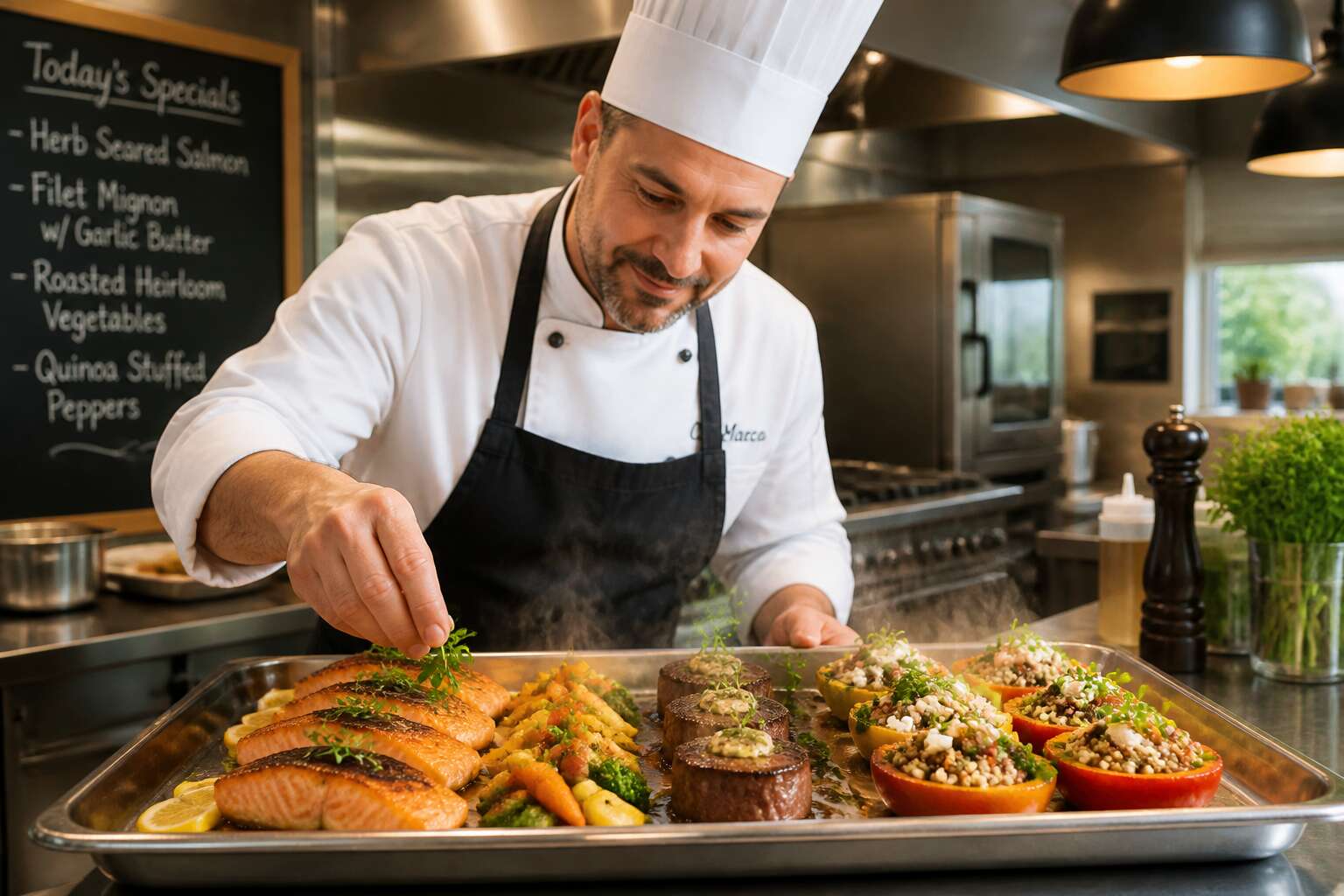
Understanding Catering 365
Definition and Core Philosophy
Food is more than sustenance; it is the quiet language of celebration and daily survival. Within the bustling landscape of South African hospitality, the concept of catering 365 has shifted from a simple transactional service to a comprehensive partnership. We have moved beyond the single event, embracing a philosophy where consistency and quality are not seasonal but perpetual. This approach redefines how businesses and families approach their culinary needs, ensuring that excellence is a standard, not a surprise.
The core philosophy rests on the belief that great food should be accessible every single day. It is a promise of reliability, where the logistics of sourcing, preparation, and delivery operate like clockwork. For operations ranging from corporate canteens to private estates, this model eliminates the stress of daily planning. The value lies in the seamless integration of a professional kitchen into your routine, creating a rhythm of nourishment that supports productivity and wellbeing.
To understand this service model, consider the operational pillars that support it:
– Menu engineering designed for repeated enjoyment without fatigue.
– Supply chain resilience that accounts for local seasonal shifts.
– Scalable labor allocation for fluctuating client numbers.
This is not merely about cooking; it is about the orchestration of resources. The true measure of such a service is the silent efficiency that allows you to focus on your core activities, while the aroma of freshly prepared meals fills your space without disruption. It is a seamless blend of practicality and indulgence, tailored for the modern South African palate.
Unique Value Proposition
Few operations can claim the fiscal discipline required to run a kitchen at full capacity every day. The unique value proposition of catering 365 is not found in a single spectacular event, but in the relentless mitigation of operational waste. You are essentially purchasing an economy of scale where the cost per plate is optimized against a perpetual production cycle, a luxury unavailable to ad hoc service providers. This is a system designed for the psychological comfort of consistency, which allows your management team to redirect attention from menu anxieties to strategic objectives.
For the client, this translates into a predictable budgetary line item. It removes the variable chaos of daily sourcing and labour negotiation from your desk. Consider the specific operational benefits embedded in this model:
– Procurement leverage that directly reduces ingredient expenditure.
– An embedded auditing trail for health and safety compliance.
– Reduced onboarding time, as the catering staff become part of your facility’s ecosystem.
The value is also temporal. The 365 model refuses the volatility of seasonal staffing. We maintain a full-time brigade, which means the person preparing your Monday breakfast is the same professional crafting your Thursday lunch. This continuity breeds a familiarity with your preferences that is impossible to replicate with intermittent staffing. You are not paying for a service; you are maintaining a dedicated asset that functions with the quiet precision of your own utility grid. The true efficiency lies in the absence of decision fatigue, a tangible benefit for any operation focused on output.
The Year-Round Operational Model
The South African catering sector loses billions of rand annually to spoilage and last minute procurement. Catering 365 shuts down those losses. The year round model runs on a schedule where every shift feeds the next.
Forecasting runs on a rolling 14 day cycle. Procurement locks in prices before market volatility shifts. Storage turns over before perishables degrade. The kitchen uses a standardised recipe list, so quality control on a Tuesday morning matches a Friday afternoon. Delivery routes are optimised for the client’s premises, cutting transport costs.
The model rests on three pillars:
- A monthly menu that reuses ingredients across stations.
- A delivery corridor that consolidates orders into fuller trips.
- A digital log tracking every batch from receiving to serving.
For a business in Johannesburg or Durban, catering 365 operates as infrastructure, removing daily negotiation from your management team. It is engineered to make each day behave like the one before it.
Key Differentiators from Traditional Caterers
Traditional caterers treat every order as a fresh transaction. They quote, deliver, and vanish until the next call. Catering 365 operates as a standing system. The contract runs year round, the menu repeats on a cycle, and the same team returns to the same kitchens every week.
Three differences matter most:
- Pricing is fixed before procurement, so meal costs do not shift with market volatility.
- Staff are assigned to your premises, not pulled from a roster of strangers each morning.
- Documentation follows every batch, which removes guesswork from audits and budget reviews.
A traditional caterer sells meals. Catering 365 sells predictability. For a hospital in Bloemfontein or a mine canteen in Mpumalanga, that predictability is the entire point. The serving schedule, the invoice, and the quality log all arrive on the same rhythm, every single day.
Comprehensive Service Offerings
Corporate Event Solutions
Across Johannesburg and Cape Town, corporate events now account for over 35% of business hospitality spending. Catering 365 delivers comprehensive service offerings that extend beyond food delivery. Our corporate event solutions integrate venue coordination, equipment rental, and dietary management into one coherent operation. For a boardroom briefing or an exhibition launch, we handle every detail.
- Registration stations and guest flow management
- Multi-venue buffets with hot food transportation
- Real-time attendee dietary tracking
We also provide bilingual staff for African and English speaking audiences. Each engagement receives a dedicated project manager. Catering 365 maintains a 24 hour response line for last minute changes. This structure removes guesswork for your event team.
Social and Private Events
People often forget that a wedding or a milestone birthday carries the same logistical weight as a product launch. The stakes are personal. When you are hosting fifty relatives for a 60th anniversary or a hundred guests for a garden party, the food cannot be an afterthought. This is where catering 365 steps in with a fully managed approach for social and private events.
Our service for private functions operates on a simple premise: you host, we handle the rest. We do not just drop off chafing dishes and leave. We bring a full brigade, including a dedicated head chef, waiting staff, and a site coordinator who ensures the timeline holds. The menu design is a collaborative process, taking into account family recipes you want replicated or dietary restrictions that often appear on RSVPs. We have seen a surge in intimate gatherings with twelve guests that demand the same culinary precision as a banquet for two hundred.
Because private events are often held at homes or unconventional venues, our logistics team conducts a site assessment beforehand. We manage the tricky parts, like arranging portable ovens when the venue lacks a kitchen or navigating estate security protocols for delivery vehicles. The goal is that nothing disrupts the evening’s rhythm.
To give you an idea of the range we cover, here is a typical structure for a private function:
- A pre-event consultation to lock in the menu and floor plan.
- Full staffing for service, bar, and clean-up.
- Rental of tables, linens, and glassware that match the aesthetic.
- On-site cooling and reheating equipment to maintain food safety standards.
The catering 365 team understands that a private event is not a rehearsal. You only get one shot at the birthday toast or the first dance. We focus on the mechanics of execution so you can focus on the people in the room. While corporate work requires rigid scheduling, private events require a softer touch, a willingness to adapt to the mood of the party. That flexibility is built into our service model, ensuring the food remains a highlight, not a source of stress.
Virtual and Hybrid Catering Options
The shift toward hybrid gatherings has redefined what a meal can accomplish. A client in Johannesburg recently hosted a product reveal for forty in-person guests while streaming to two hundred remote attendees across three provinces. The in-room platters needed to impress, but the digital audience also needed a sense of the culinary experience. This is the new standard for engagement, and catering 365 has adapted its service model to meet it.
For virtual components, we design experiences that travel well. We create individual bento style boxes that hold their structure during delivery, ensuring each remote participant opens a package that looks as deliberate as the table setting in the room. The logistics are different. We coordinate with courier networks to ensure temperature controlled delivery windows align with the broadcast schedule. Our team maintains a redundant line of communication with the event tech producer, so the food arrives exactly when the camera focuses on the meal.
Our comprehensive offering for this format includes:
– Pre event tech walkthroughs to align the menu reveal with the broadcast timeline
– Delivery of curated meal kits with heating instructions that do not require a chef
– A dedicated hotline for remote guests to ask questions about allergens or substitutions
– Visual styling of takeaway boxes to match the event branding
This approach requires us to think beyond the plated course. We consider how food appears on a laptop screen under studio lighting and how a delivered package can create a shared moment of ceremony for someone sitting alone in a home office. Catering 365 handles the fragmentary parts of this experience so that the host can focus on speaking to the camera or mingling with the room, confident that the food reinforces the message on every screen.
Specialty Menus for Dietary Preferences
South Africans are remarkably vocal about their dietary needs, and that candor is a gift. Within the corporate world, the request for a vegan menu is no longer a quiet aside; it is a standard line item in the event brief. At catering 365, we treat this specificity not as a constraint, but as a directive for culinary intelligence.
We build our specialty menus from a foundation of rigorous cross-contamination protocols. A gluten free requirement is not met by simply removing a crouton; it demands a separate preparation station and dedicated utensils. Our chefs maintain detailed allergen matrices for every dish, and we label all platters with clear, actionable information. We offer:
– Plant forward mains that rely on umami-rich ingredients like roasted mushrooms and fermented grains.
– Halal and kosher certified protein options sourced from accredited suppliers.
– Diabetic friendly dessert selections that use natural sweeteners like date syrup and monk fruit.
The true test of our service is the guest who arrives with a printed list of allergies and a history of disappointment. When they find that our kitchen has already anticipated their needs without a fuss, the relief is tangible. This is the quiet work of catering 365; we remove the anxiety from the table so that the conversation can flow unimpeded. The meal becomes a form of respect, a silent acknowledgement that every person in the room deserves to be fed well, without exception. We coordinate with the client to ensure every dietary profile is logged and accounted for before the first pan is fired.
International Cuisine Selection
The palate of Johannesburg has circumnavigated the globe, and the days of predictable banquet fare are buried. We respond with a repertoire that demands a passport. Our culinary research is not a casual browse; it is an audit of the street food of Lagos and the spice routes of Durban.
This yields an edible atlas of the world.
We deliver beyond the generic “theme night” by executing specific regional accuracy. A West African jollof rice must carry the smoky register of the fire; a Southeast Asian laksa requires the precise viscosity of coconut and chili. This is the standard.
– Argentinian asado with chimichurri
– Ethiopian injera with spiced stews
– Japanese bento boxes for working lunches
The international selection is a practical solution for diverse corporate teams. Instead of one generic menu, we create a global spread that respects local sourcing. This is the catering 365 methodology: technique travels, but ingredients remain rooted in seasonal South African soil. It is a business decision that considers the preferences of every employee on the floor.
Additional Services Equipment and Staffing
The true test of a catering operation is not the first bite, it is the thousandth plate moving through a crowded room without a flicker. At catering 365, that reliability is built before the event begins, in the cold stores, the service lifts, and the rehearsal runs. Our equipment is an inventory of precision: insulated carriers, heated pass units, espresso rigs, and glassware shelving mapped to each venue’s geometry. We do not rent from third parties and pray. We own the chain, from the generator to the garnish tray.
The staff are the unspoken contract. Every chef, runner, and barista is certified in our operating standards, not just in cooking or pouring, but in the choreography of hospitality. We offer additional services that remove the administrative load from your shoulders:
- Full event styling and table architecture
- Beverage logistics with licensed mixologists
- On site technical support for temperature control
These functions are not layers of expense; they are the difference between an event that survives and one that breathes. You feel it in the unhurried way a floor manager solves a jammed door or the silent swap of a depleted chafing fuel cell. That is the invisible weight of catering 365, carried so you never notice it.
Strategic Planning for Every Season
Seasonal Menu Rotations
In the Southern Hemisphere’s turning wheel, February’s harvest of peaches and nectarines gives way to April’s butternut and sweet potato. The caterer who ignores this celestial schedule serves a plate disconnected from the earth. A compelling 87% of event planners now prioritize seasonal ingredients when selecting their vendor. The true challenge of catering 365 is not the volume of events, but the rhythm of the ingredients. We map the local growing seasons twelve months ahead. This forward planning allows us to lock in produce at its peak, capturing flavour before it travels across borders.
Our kitchen begins its strategic dance in early spring. We review the harvest calendar and align it with the social calendar. A July wedding in the Winelands demands hearty, slow-braised meats. A December coastal celebration calls for lighter citrus and fresh linefish. The sequence is deliberate and informed by years of data. Here is how we structure a seasonal rotation:
1. Assess the upcoming three month window for crop availability.
2. Design core dishes around three hero ingredients.
3. Develop a dessert profile that matches the ambient temperature.
4. Pilot the new menu with a small corporate tasting.
This is the unseen architecture behind a seamless service. The flavour of the Karoo lamb in August is a different creature than the one served in November. We honour that difference. The strategic plan is a living document, adjusted weekly by our head chef. It is the quiet promise of catering 365, that every plate reflects the exact moment it was served.
Weather and Logistics Considerations
In South Africa, weather dictates more than attire; it orchestrates the entire logistical ballet of an event. A summer afternoon thunderstorm on the Highveld can arrive with less than an hour’s notice. Our operational plans account for that unpredictability, not just for the event itself, but for the journey to get there.
There is a tangible difference between planning a menu and planning for the climate. We consider the angle of the sun when positioning a dessert table and the wind direction when placing a braai station. For a coastal event, the salt spray alters the flavour profile of an open dish. For a bushveld function, the red dust affects how we pack and prepare the equipment.
Our logistics team tracks the long-range forecasts as closely as the chef tracks the harvest. This scrutiny ensures that every element arrives pristine and performs perfectly, regardless of the elements. The reliability of the operation is the backbone of catering 365.
- We stage equipment at off-site depots to reduce travel time to the venue.
- We secure backup power sources for venues with a history of load-shedding.
- We pre-position water and shade structures for summer events in Durban or the Lowveld.
This is the unseen coordination that allows guests to remain oblivious to a sudden change in weather. When the Cape Doctor blows, we anchor the marquees and serve warm, spiced wine. When the Free State summer sun peaks, we rotate drink stations to shaded areas. The strategic plan for catering 365 is built on these contingencies, ensuring a seamless execution that weather cannot derail.
Holiday and Peak Season Preparedness
The festive season can triple a caterer’s workload overnight. For catering 365, that surge is a planned rhythm, not a scramble. We map every public holiday, school break, and long weekend months ahead!
Peak season preparation covers the obvious and the overlooked:
- extending refrigeration capacity for summer heat
- securing backup staff for last minute cancellations
- stockpiling non perishable tableware
This forward planning means a December wedding or an Easter gathering receives the same calm precision as a Tuesday luncheon. The busiest weeks never catch us off guard.
Managing Client Expectations Year-Round
In the Southern Hemisphere, the calendar turns on a different hinge. Our seasons do not behave according to the northern cookbook, and catering 365 operates on a rhythm attuned to this reality. The quiet of a Johannesburg winter week is as much a part of the plan as the chaos of a Cape Town summer afternoon. Strategic planning for every season means anticipating the flow of fresh produce, staffing levels, and energy costs before they change, not after. We track the slow months with the same intensity as the frantic ones, because that is where the mistakes hide.
Managing client expectations year-round requires a language of honesty. We do not promise summer berries in July, and we will not pretend a windy April day on the Highveld is ideal for an outdoor buffet. Instead, we make the limitations part of the conversation early, so they never become surprises later. This involves more than a confirmation email and a phone call:
– We flag potential weather disruptions three days before the event.
– We set realistic menu boundaries based on seasonal availability, not supplier promises.
– We tell clients exactly when we need final numbers, and we hold them to it.
This approach converts an unpredictable calendar into a series of known quantities. The January lull, the May uncertainty, the September transitions, they all become opportunities to refine logistics and sharpen communication. Catering 365 turns this foresight into a quiet discipline. Every event, whether it lands in a downpour or a dry, clear night, is handled with the same measured control. The client feels the difference not in grand gestures, but in the absence of chaos.
Backup Plans for Unpredictable Events
The Cape Doctor gale that flattened marquee tents in 2023 was not an anomaly. It was a preview. Weather data across the Western Cape shows a 14% increase in extreme wind events over the past decade. For catering 365, this is not a headline. It is a planning metric. Our backup plans for unpredictable events are not a binder on a shelf. They are a living protocol we exercise every season.
Preparation means we have already mapped the alternative routes for food transport before the N2 closes. We have a standing relationship with a venue down the road that has a kitchen, in case the primary site loses power. The equipment truck carries extra tarpaulins, gas burners, and a generator. We do not hope for clear skies. We assume interference.
– Define the failure point before the event, power, access, or structure.
– Confirm the secondary vendor for ice and dry ice in the morning.
– Brief the senior chef on the emergency menu switch, which is a pre-planned dish set.
– Verify the cellphone signal strength at the venue, so the team can communicate.
When a cold front stalls over the Garden Route, we activate the protocol. The client gets a quiet update with the revised serving flow. The food is held in insulated units, not chafing dishes. The floor plan gets shifted to the covered side of the property. There is no drama because the decisions were made months ago. The response is quick because the thinking was slow. Catering 365 measures its resilience in the uninterrupted delivery of a hot meal, not in the absence of a storm.
Our operational sequence on event day is deliberate.
1. The logistics lead checks the weather satellite at 06:00.
2. The venue manager confirms the generator fuel level.
3. The head chef verifies the backup protein supply is thawed and ready.
4. The operations director approves the final go or no-go on outdoor elements.
This is how we remove the guesswork from an unpredictable calendar. We treat every event as a test of our systems. The client sees a service that runs smoothly, even when the sky falls. They do not see the precaution. They just see the result, which is a seamless experience. For catering 365, the backup plan is not an afterthought. It is the core of the operation.
Menu Development and Culinary Innovation
Sourcing Local and Sustainable Ingredients
Every kitchen tells a story, and mine begins long before the stove is lit. The narrative starts with the earth, with the fishermen who cast their nets before dawn, and with the farmers who know the exact moment their produce will peak. For a catering 365 operation, this relationship with local suppliers is not just a nice sentiment; it is the bedrock of a constantly evolving menu. We build our culinary calendar around the harvest, not the other way around.
The pursuit of sustainable ingredients requires a particular kind of discipline. It means tracking the lifecycle of a free-range chicken from the veld to the carving station. It necessitates deep relationships with purveyors who understand that our demand for consistency changes with the seasons. This approach allows us to reduce our carbon footprint while simultaneously elevating the freshness of every dish. The flavour difference is not subtle; it is the difference between a generic meal and a memorable experience.
Sourcing this way is not without its logistical puzzles, particularly when serving over 1200 guests. The supply chain has to be as agile as the menu itself. Consider the practical consequences of this philosophy:
– It requires a flexible pricing model that anticipates market fluctuations.
– It demands kitchen brigades capable of adapting dishes based on the day’s catch.
– It relies on a database of regional growers who can guarantee quality on specific dates.
This is the real work of culinary innovation in the catering industry. The creativity does not come from conjuring exotic ingredients from distant lands, but from respecting the integrity of what is available locally. Our chefs develop dishes around a specific heirloom tomato or a particular breed of lamb, letting the ingredient define the technique. This is the true essence of a catering 365 model, where the relentless pace of daily service is softened by a profound connection to the land.
The result is a menu that feels alive, a changing tableau that guests can sense. When we plate a Karoo lamb that grazed on aromatic shrubs, or a salad of just-picked microgreens, we are serving a piece of South Africa. It is a practice that requires patience and deep local knowledge. But for those of us who take the long view, it is the only way to ensure that the food we serve is as honest and vibrant as the people who eat it.
Incorporating Global Flavors
Around 60 percent of South African event organisers now seek global flavours on their menus, yet few caterers possess the knowledge to honour those cuisines with any depth. At our catering 365 operation, menu development starts with disciplined research, not guesswork.
We study authentic preparation methods, from Japanese kaiseki to Mexican mole, then map those techniques onto ingredients from our local suppliers. This process lets us serve a familiar butter chicken and a smoked snoek pâté on the same menu, each one credible.
The innovation cycle follows a clear sequence:
- Identify the regional cuisines clients request most.
- Research foundational spices, cookware, and serving rituals.
- Prototype each dish with available local substitutes.
- Refine the recipe through structured tasting panels.
This rigour matters because global flavours require restraint. We do not churn out fusion for its own sake. Instead, our catering 365 chefs train continuously in these traditions, so the finished dishes tell the truth about their origins!
Balancing Tradition with Modern Trends
Menu development forces a choice between memory and appetite. As a catering 365 operation, we feel that tension daily. Tradition asks us to honour the past. Modern trends demand speed and novelty. Neither wins outright.
Our chefs treat conventional recipes as benchmarks, then interrogate them. A Cape Malay bobotie can absorb a modern twist without losing its identity. The trick is knowing which elements bend and which break. We carry that responsibility into every tasting.
We follow three rules:
- The base technique stays intact.
- The ingredient swap must improve, not merely change.
- We test every innovation against the original.
This discipline keeps our catering 365 menus grounded. Innovation without roots is noise. Tradition without curiosity is stagnation. Both need the other to stay honest.
Interactive Food Stations and Live Cooking
Some guests remember the aroma of a pan searing long before they recall the seating plan. That is why live cooking stations have become a fixture at our events. They create a sensory anchor, something that lingers long after the last plate is cleared. Watching a chef manoeuvre a flamed pan of sizzling linefish transforms the meal from service to spectacle. The engagement is immediate, the anticipation palpable.
This format also solves a practical dilemma for a catering 365 operation: variety without waste. Instead of preparing fifty identical plates, we present components that allow for personal assembly. A braai station with different marinades, a sushi counter with fresh garnishes, or a pasta bar with custom sauces. Each guest becomes the architect of their own plate. It is a system that reduces food cost while increasing perceived value. The client sees theatre; the accountant sees efficiency.
The psychology of choice plays a significant role here. When people build their own meal, they rarely complain about the result. They made it, after all. For us, it is an exercise in constant vigilance. We must prepare ingredients that hold up under the heat lamps and the pressure of a curious crowd. The technique requires a different rhythm than plated service, one that balances speed with showmanship.
– It offers immediate customisation for dietary needs without pre-plating.
– It creates a focal point that encourages guest interaction and networking.
– It reduces the need for extensive back-of-house staff, focusing talent on the floor.
A well-executed interactive station feels effortless, but the logistics are demanding. We position them away from main traffic flows but visible enough to lure attention. The ventilation must handle the cooking output, and the mise en place must be ruthlessly organised. This is the difference between a gimmick and a culinary feature. For a catering 365 operation, every event is a test of precision, a chance to turn logistics into an art form.
Beverage Pairings and Bar Services
Menu development at catering 365 is a practical process. We test flavour combinations against local conditions and client expectations. Innovation comes from precision. We refine classics and introduce sous vide techniques or fermented elements when they improve the dish. The result is a menu that feels intentional, not random.
Beverage pairings receive the same scrutiny. We design bar services around the flow of the event, from welcome spritzes to digestifs. We curate local wines and craft spirits, then match them to the texture of each course. A robust red for slow braised beef, a crisp chenin for linefish.
– We build a tasting flight to guide guests through the menu.
– We offer zero proof pairings with house made infusions.
– We adjust pour sizes to match the evening’s tempo.
Every pour and plate supports the narrative. That is how catering 365 creates a unified experience.
Enhancing Client Experience
Customization and Flexibility
In ten years of catering across South Africa, I have seen guest counts shift by twenty percent on the morning of an event. That reality shapes how catering 365 handles customization.
Flexibility means adjusting portions, swapping sides, or adapting a dish for a last minute allergy. It also means listening to the flow of your day. Some clients ask for a longer grazing window; others need a shorter seated service. We accommodate both.
Practical options include:
- Pausing service during speeches without losing momentum
- Reordering courses to match your programme’s timeline
- Upscaling portions for surprise late arrivals
This responsive approach turns catering 365 into a true partner. I have watched hosts exhale when we adjust on the spot, and that relief is the real measure of success.
Communication and Consultation Process
Assumptions are the enemy of a seamless event. A misheard dietary request or an unspoken expectation about service flow can unravel hours of planning. That is why a deliberate consultation process sits at the heart of catering 365. We do not take a one size fits all approach to your vision. Instead, we begin with a structured conversation that digs deeper than the menu. We ask about the rhythm of your day, the temperament of your guests, and the moments you want to protect.
This dialogue translates directly into a detailed service brief. This brief acts as the single source of truth for our entire crew. It covers timing, presentation, and communication protocols. For example, we establish a single point of contact for your event manager. This prevents fragmented messaging and ensures that any mid-event adjustment is routed through one decisive channel. This clarity is not just operational efficiency. It is the mechanism that allows us to execute the flexibility we spoke about earlier without creating chaos in the kitchen.
– Pre event strategy sessions to map the guest journey
– A dedicated client liaison for all queries
– Post event debriefs to refine future collaborations
Ultimately, this process removes guesswork. When you can articulate the nuances of your event, we can apply our ten years of problem solving to it. The result is a service that anticipates needs rather than reacting to them. You spend less time coordinating and more time hosting, secure in the knowledge that every detail has been considered. That peace of mind is our true deliverable.
On-Site Management and Coordination
On event day, the difference between a good caterer and a great one shows in the unnoticed details. While guests are conversing, the catering 365 site manager monitors service pace, checks food temperatures, and recalibrates timings without interrupting a single conversation. This is effective on-site management in practice.
Our coordination runs on a clear chain of command. Every crew member knows their station, the designated runners, and the protocol for unexpected requests. We track glassware levels, course transitions, and buffet hold times, so nothing waits until a guest notices a delay.
- Continuous communication with the kitchen brigade
- Real time adjustments to service flow and seating
- Discreet resolution of supplier or equipment issues
This structure allows you to host, not troubleshoot. We handle the small problems before they become visible. That focus keeps the day moving smoothly for every catering 365 client.
Post-Event Feedback and Follow-Up
After the final guest departs, the experience continues. A dedicated follow up call within 48 hours allows us to hear what worked and what did not. We compile these observations into a private event report for your records.
Our feedback loop shapes future menus and service adjustments. This ensures every subsequent gathering benefits from past lessons. The follow up touchpoints we rely on include a personal phone call from the site manager, a digital satisfaction survey, and a detailed summary of service metrics. Each interaction serves a specific purpose, from identifying timing gaps to refining flavour profiles.
This practice makes catering 365 a partner that values long term relationships rather than a single transaction. Your voice becomes part of our operational memory.
Building Long-Term Relationships
A familiar face at a dinner table changes the mood of the room. That is why catering 365 invests in relationships, not transactions. A wedding in Cape Town, a corporate gala in Johannesburg, a family reunion in Durban: each event deepens the connection.
We remember the details that matter. The director who avoids dairy. The bride’s grandmother who loves koeksisters. The client who prefers still water over sparkling. These small memories accumulate into institutional knowledge.
Clients who return to catering 365 year after year notice the difference. Planning meetings become shorter. Event days run smoother. There is comfort in working with a team that already knows your venue, your staff, and your expectations!
Several factors sustain these long-term partnerships:
- Our consistency across thousands of plates served
- The continuity of staff assigned to recurring clients
- Our willingness to grow alongside your changing requirements
Operational Excellence and Logistics
Supply Chain Management
A staggering 43% of South African food service businesses cite supply chain inconsistency as their primary profit killer. At catering 365, that statistic is a philosophical enemy. We treat every toast, every plate, and every delivery window as a precision operation driven by micromanaged logistics. Our rhythm depends on real-time fleet tracking and cold chain integrity protocols that never waver, even through load shedding schedules. This granular control ensures our kitchens receive the right protein and produce at the precise moment required for peak freshness. When you hire us, you inherit a complex nervous system designed to eliminate downtime and spoilage.
We build our infrastructure on redundancy rather than hope. It is a necessary obsession when your brand promises culinary service every single day of the year. Our procurement team maintains multiple vendor relationships for every essential ingredient, effectively insulating our events from regional crop failures or transport strikes. This aggressive approach to risk mitigation keeps the operation seamless. We also choreograph our equipment and staffing logistics to match the tempo of the calendar, ensuring that a midwinter boardroom meeting receives the same rigorous attention as a summer wedding.
Specific elements of our operational doctrine include:
– Dedicated loading zones and temporary kitchen setups that comply with municipal health regulations.
– Backup refrigeration units powered by solar and inverter systems to combat grid instability.
– Pre-planned traffic routes that account for peak Johannesburg congestion and Cape Town weather patterns.
– Real-time communication channels between drivers, chefs, and on-site coordinators.
Ultimately, the administrative machinery behind catering 365 remains invisible to you. You notice the hot food and the empty plates, but you should never notice the frantic coordination making it possible. That quiet, relentless efficiency is the core of our value, allowing you to focus purely on your guests while we handle the intricate dance of cold storage and hot ovens.
Kitchen and Equipment Efficiency
The unglamorous truth about events is that the venue rarely matches the menu. Our operational excellence solves that mismatch by treating the kitchen setup as a fluid, mobile problem. The mobile kitchens we deploy are designed to be plugged into any space, from a park in Pretoria to a penthouse in Sandton, without requiring structural changes. We place a premium on compact, high-efficiency ovens and blast chillers that deliver the same results as a permanent kitchen. This kitchen and equipment efficiency is not a myth; it is a measurable process that reduces setup time by hours.
Energy resilience is central to our planning. We operate a fleet of equipment that can switch seamlessly between battery, solar, and municipal power sources. It is a practical response to the reality of load shedding, not a theory. Every unit we deploy is fitted with monitoring software, allowing our technical team to check performance metrics in real time.
Our operational doctrine is simple:
– Pre-fabricated cooking stations that reduce on-site assembly time.
– Modular refrigeration units that scale up or down based on guest counts.
– Automated temperature logging for every transport container.
– On-site spare parts kits for immediate minor repairs.
When you book our services, you are not only hiring chefs. You are hiring an engineering mindset. The result is that your function runs with the quiet precision of a well-oiled machine, and the only thing that gets overworked is the dance floor. We do not expect you to notice the mechanics behind the meal, but you will notice the consistency of the food. That consistency is the product of our infrastructure, which is why we designed it around practicality rather than showmanship.
Staff Training and Certification
Ever seen a service team pivot without a word when the power drops? That is the result of rigorous certification, not luck. Our logistics staff train for load shedding scenarios, route delays, and equipment failures until response becomes instinct. Each person on a catering 365 crew knows how to pack a mobile kitchen for maximum stability. They practice cold chain handovers and allergen checks under time pressure.
Every supervisor carries proof of verified credentials, renewed annually. The program covers:
- HACCP food safety certification for all leads
- Defensive driving and route hazard simulation
- Hydraulic lift and ramp handling assessments
This training turns potential disasters into background noise. When your event runs without a hiccup, you have already felt the benefit of our logistics discipline.
Food Safety and Compliance
An event’s true measure often lies in the silent systems operating beneath the surface. For catering 365, that quiet infrastructure is built on precision, where meticulous planning meets rigorous execution. Operational excellence is not a destination; it is the disciplined management of every movable part, ensuring that when the moment of service arrives, the machinery of hospitality performs seamlessly. This philosophy transforms logistical complexity into a controlled, repeatable process.
The backbone of this operation is a compliance framework that anticipates friction before it surfaces. Cold chain integrity, for instance, is a non-negotiable standard, with temperature logs reviewed at every transfer point. This vigilance extends to equipment sanitation and the careful segregation of allergens during preparation. By embedding these checks into the daily rhythm, catering 365 ensures that food safety is a constant, invisible presence rather than a reactive afterthought. This proactive stance is the foundation upon which memorable experiences are built.
Cost Optimization and Transparent Pricing
A single rerouted delivery can add thousands to an event’s bottom line. Catering 365 treats logistics as a discipline, not an afterthought. Every kitchen shift, vehicle route, and loading dock is mapped against the clock. Batch windows are staggered to avoid idle labour. Delivery runs are consolidated by zone, so fuel spend stays predictable. The result is an operational rhythm that absorbs surprises without inflating the bill.
In our kitchens, cost optimisation is granular. For example:
- Load manifests are verified against venue access times.
- Equipment returns are scheduled in the same trip as the final pickup.
- Cross-utilised ingredients appear on multiple menus within the same week.
That mindset extends to pricing. Transparent pricing at catering 365 means line-item quotes with no hidden service charges. Clients see exactly what covers food, transport, and staffing. If a menu changes mid-plan, the quote adjusts openly. You pay for the architecture of the event, not for guesswork. That clarity sustains a year-round partnership.


0 Comments