The Cultural Roots of Island-Style Feasting
Communal dining traditions and the meaning of sharing meals
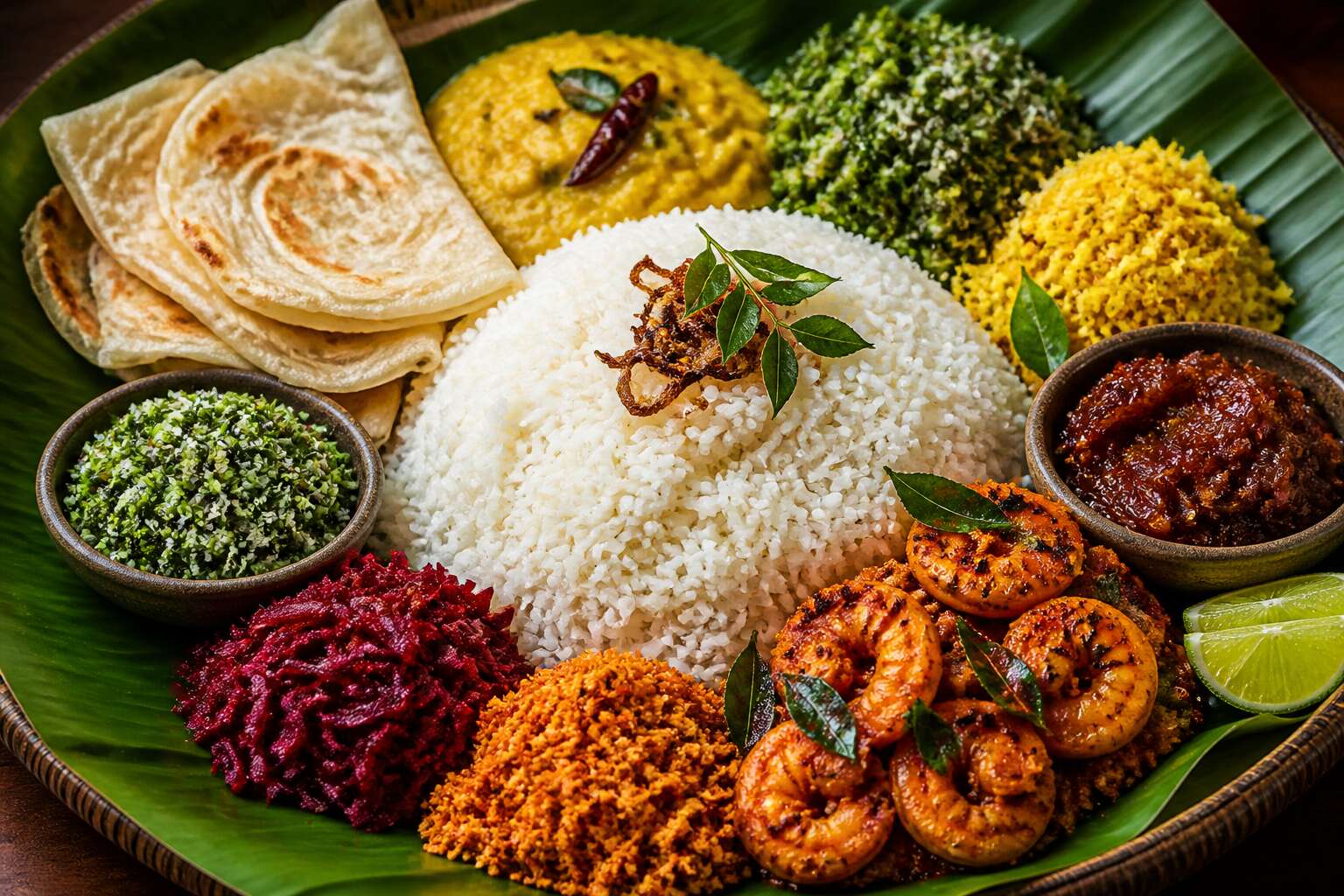
In Sri Lanka, the question “have you eaten?” opens the table before any reply. Understanding food platters Sri Lanka begins with the rice and curry spread, a tradition that binds generations. Across the island, families and neighbours gather around banana leaves and clay bowls, each dish placed for collective reach rather than individual consumption. This custom, rooted in ancient agrarian villages, makes the table a shared space where formal roles relax and conversation flows alongside the coconut milk curry.
In homes I have visited, the eldest serves first, and portioning is deliberate. No one eats alone. Hosts refill dishes without question until every hand withdraws. For visitors, joining such a feast is an act of trust, a silent agreement to honour the household’s rhythms.
Regional specialties from coastal, highland, and rural areas
Of all the island’s culinary riddles, the most telling is how the land itself dictates the feast. A food platters Sri Lanka spread from Negombo tastes of the ocean, while the same curry formula transforms in Kandy with digestive spices meant for cooler altitudes. These are not variations on a theme. They are distinct culinary dialects.
In the highlands, the staple tilts toward crispy hoppers and leeks simmered in coconut cream. The coastal south counters with a fierce, black pepper heat that clings to the tongue, a deliberate shield against the humidity. Rural villages in the dry zone rely on the karapincha leaf and the earthy depth of sun-dried Maldive fish.
Consider the geography of flavour:
– Coastal platters give weight to seafood curries, often using goraka for a sour, smoky tang.
– Highland spreads favour root vegetables and a heavier hand with rampe (pandan leaf).
– Rural areas celebrate the jackfruit, cooked as a savoury meat substitute, which absorbs the coconut milk base readily.
The result is that a single request for food platters Sri Lanka can yield radically different experiences. A Jaffna platter marches with a fiery sambol that humbles the uninitiated. A Galle version arrives sweet and mild, tempered by Dutch influences. In my travels, asking a host what defines their local plate reveals more history than any museum. The sea, the mountain, and the plain all demand their tribute, and the platter simply obeys.
The role of spices like cinnamon, cardamom, and pandan leaves
The spice trade built Sri Lanka’s culinary identity long before the first tourist ever set foot on the island. Cinnamon, native to the island’s soil, was worth more than gold in ancient markets. This history shapes every modern food platters Sri Lanka experience, where the aroma of roasted spices hits you before the dishes arrive.
The cultural roots of island-style feasting run deep. Spices were not merely seasonings; they were currency, medicine, and social status. A family’s wealth was once measured by the contents of their spice box.
- Cinnamon bark is used whole in rice dishes and ground for meat curries.
- Cardamom pods are cracked open for their seeds, which perfume coconut sambols.
- Pandan leaves are tied in knots and simmered to release their sweet, grassy essence.
These elements converge on a single plate with quiet authority. The heat of chilli is tempered by the cooling presence of coconut milk, while cardamom adds a floral note that cuts through the fat of fried fish. When you order food platters Sri Lanka, you are tasting a system refined over centuries, not a random assortment of recipes. The cooks who assemble these platters know that balance is not decorative. It is structural.
Traditional banana leaf presentation and its significance
Banana leaf presentation is where food platters Sri Lanka reveal their full logic. The leaf is not a garnish. It is a plate, a tablecloth, and a fragrance dispenser all at once. When hot rice hits the leaf, the botanical oils release a sweet, earthy note no ceramic plate can replicate!
The layout follows a quiet order. Each dish occupies a specific position relative to the rice. This is practical geometry. The leaf’s central seam acts as a divider, keeping sauces from flooding the spread. In coastal homes, the leaf’s natural water resistance means runny curries behave.
- The leaf is a natural antimicrobial surface, historically safer than wood.
- Disposal is zero-waste; the leaf feeds livestock after the meal.
- The slight bitterness of banana leaf sharpens the palate between bites.
Banana leaves are also a class equaliser. Everyone eats from the same leaf, whether at a wedding or a roadside canteen. That green sheet carries weight, tradition, and a whisper of the jungle every time you order food platters Sri Lanka.
How temple festivals and family gatherings shape culinary customs
Temple festivals drive the island’s cooking calendar. When a village temple celebrates its annual procession, households prepare specific dishes for offerings and visitors. The puja tray carries fruit, kavum, and coconut-based sweets. These food platters sri lanka are not random assortments. They follow ritual logic, reflecting what the harvest has given.
Family gatherings work the same way in miniature. An almsgiving or a homecoming brings relatives into one kitchen. Each person claims a dish. The aunt owns the curry. The cousin handles the sambol! This division of labour is old knowledge, passed down without recipe books.
The ritual calendar shapes the menu. Buddhist holidays call for vegetarian spreads. Harvest season brings milk rice. Weddings demand stacked sweets. Each occasion produces a distinct spread, and food platters sri lanka carry that cultural memory forward with every fresh batch of rice.
Crafting the Perfect Rice and Curry Spread
Selecting the right rice: red rice, samba, and basmati options
The average Sri Lankan household cooks rice twice daily. For food platters sri lanka, the rice selection comes first. The choice shapes the entire experience. Each variety brings a different texture and flavor to the spread:
- Red rice offers an earthy bite and a fibrous bran layer that stands up to robust curries.
- Samba rice cooks soft and slightly sticky, ideal for scooping with fingers.
- Basmati provides a fragrant, elongated grain for lighter meals.
Salt goes into the cooking water. A good spread balances heat, creaminess, and acidity. The rice absorbs the gravy without turning mushy. It must remain separate, each grain distinct. Some hosts mix ghee through the rice, and that simple touch changes everything! The grain sits at the center of the platter, surrounded by small bowls of curry, sambol, and chutney. This arrangement appears across food platters sri lanka, from home kitchens to restaurant tables.
Signature curries: chicken, fish, dhal, and jackfruit varieties
In Sri Lankan home cooking, the curry spread determines the meal’s character. Chicken curry, fish curry, dhal, and jackfruit each occupy a distinct position on food platters sri lanka.
Chicken curry simmers in roasted spices and coconut milk, offering a rich, deep flavor. Fish curry brings tamarind’s sharp tang, a coastal counterpoint to the heavier proteins. Dhal, cooked with turmeric and pandan, provides a creamy, steadying element. Jackfruit, with its meaty texture, absorbs the curry’s heat while keeping its own subtle sweetness.
- Chicken: bold, spiced, and substantial
- Fish: tangy, coastal, and quick-cooking
- Dhal: smooth, nourishing, and neutral
- Jackfruit: tender, slightly sweet, and hearty
The cook balances these four textures against the rice. No single curry dominates. Each spoonful pulls a different flavor forward, and that interplay keeps the meal engaging. When I assemble a proper food platters sri lanka spread, I respect this equilibrium.
Essential sambols: coconut, tomato, onion, and lime pickle
A sambol is not a garnish. It is the sharpest weapon in the Sri Lankan arsenal. Where curries build depth through slow simmering, the sambol cuts through with raw, immediate force. This contrast is the secret to a compelling rice and curry plate.
The coconut sambol, known as pol sambol, is the standard bearer. Grated coconut, red onions, chili, and lime juice create a bright, granular texture that clings to hot rice. The tomato sambol offers a softer acidity, almost jammy in consistency, which tempers the heat of the hotter curries. Onion sambol delivers a crunchy, pungent bite that wakes up the palate. Finally, the lime pickle, or dehi pickle, provides a preserved, intensely sour note that lingers long after the meal is finished.
– Coconut sambol: the creamy, spicy benchmark.
– Tomato sambol: soft, tangy, and balancing.
– Onion sambol: crisp, sharp, and textural.
– Lime pickle: sour, preserved, and potent.
These components are the final layer of flavor on proper food platters sri lanka. They prevent the meal from becoming monotonous. Without them, a curry spread is just heavy food. With them, every single mouthful is a distinct experience, shifting from salty to sour to fiery in seconds. They are the reason a simple plate of rice and curry feels endlessly complex.
Papadums, pickles, and other crunchy side additions
On any proper food platters sri lanka, the softness of rice and curry demands a counterpoint of crunch. Papadums, thin lentil wafers, arrive with a satisfying snap! They can scoop up runnier curries. I always place a few on the side, letting the residual heat soften their edges. Mango pickle adds a fermented tang that awakens the palate.
To round out the spread, consider these traditional additions:
- Fried sprats or dried fish for a salty, brittle bite.
- Banana chips or murukku for a light, spiced crackle.
- Pickled onions or fresh cucumber slices for cool relief.
Each element resets the senses. Without these sides, the meal loses its rhythm. The crunch, salt, and sourness keep every mouthful engaging.
Balancing heat levels for diverse palates
Heat tolerance fractures every shared table. I have seen grown diners weep into their rice while others spoon extra chili oil without flinching. The approach to composing food platters sri lanka for a mixed gathering is to arrange the fire, not hide it.
Milder curries hold the center. The incendiary dishes sit at the outer edges, so timid eaters can build their plate without straying into danger. A bowl of thin coconut milk is always worth including. It reduces the burn without dulling the flavor.
- A mild dhal and a gentle potato curry anchor the center.
- The hottest fish or chicken curry sits at the far corner.
- Chili-laden sambols stay in separate dishes, away from the rice.
This arrangement lets each guest control their own exposure. The heat becomes a personal choice.
Layering flavors for depth and complexity
Layering a rice and curry spread requires understanding how each component interacts with the next. One bite of rice with dhal tastes different from that same rice after a spoonful of fish curry. In food platters sri lanka, the order of flavors matters as much as the ingredients.
Mild dhal sets the baseline. Coconut milk adds sweetness, preparing the palate for stronger curries. The hot fish curry lands with a sharp finish, leaving a cooling need that the next bite of rice satisfies.
This sequence works because each layer resets the palate. Consider the structure:
- Start with the most neutral component, like rice or dhal.
- Add a creamy element, such as coconut sambol.
- Finish with the most intense curry.
When composing food platters sri lanka, treat each curry as part of a sequence. The result is a meal that unfolds with intention!
Occasions That Call for Grand Spreads
Wedding feasts and traditional celebration menus
The largest wedding feast I ever documented fed 1,200 guests over six hours. That scale is normal for Sri Lankan nuptials, where families pool resources for months. The food platters sri lanka produces for such events follow a rigid sequence: sweetmeats first, then main curries, then desserts. Each platter is carried in a procession, and the bride’s family tastes first as a gesture of trust.
Other occasions demand similar grandeur. Aluth Avurudu, the Sinhala New Year, requires platters arranged in odd numbers. Alms-giving ceremonies set aside the first portion for monks. A child’s first rice feeding turns into a mini feast with dozens of relatives.
- Betrothal gatherings, where both families negotiate over platters
- Housewarming ceremonies, where the kitchen is blessed with a full spread
- Post-harvest thanksgivings, where farmers share the yield
I have watched grandmothers inspect the symmetry of a platter before allowing it out. The presentation is not decoration; it is a measure of respect. Every fold, every garnish, every order of dishes carries weight.
Sinhala and Tamil New Year culinary traditions
In Sri Lanka, few events rival the culinary spectacle of the Sinhala and Tamil New Year. This April celebration is anchored by the sight of food platters sri lanka families prepare to mark the sun’s transition. The spread is not casual. It is a calculated display of prosperity and familial skill, timed to the astrological calendar. The entire household pauses. The hearth is lit at an auspicious moment, and the first batch of milk rice is cooked precisely when the sun enters its new house.
The centerpiece is invariably the kiribath, a creamy rice cake that signifies abundance. It sits alongside an array of sweetmeats like kokis, which are crispy, and the syrup-soaked kevum. These are arranged with a specific visual symmetry. A platter of this nature is often offered to elders first, a practice that reinforces social hierarchy and gratitude. The meal itself is a public declaration of readiness for the year ahead.
The ritual of the first meal is a highlight. Platters are laid on the floor, often on a clean white cloth, with a banana leaf placed on top.
– A fresh, tender coconut is broken to symbolize the shedding of the old year.
– All participants eat facing the auspicious direction, as determined by the almanac.
– The eldest member of the family typically serves the first morsel to the youngest.
This moment is silent and considered. The flavors are a mix of sweet, savory, and occasionally spicy, a balance that defines authentic food platters sri lanka. The preparation is a collective effort, with neighbors often joining to help roll the dozens of sweets required. While the modern world intrudes, this tradition retains its core: a shared meal that resets the social fabric. The act of sharing the platter is the silent agreement to move forward together, carrying the same flavors into a new cycle of life.
Temple offerings (dana) and community gatherings
Mercy is measured in rice. A temple dana, a simple offering of food platters sri lanka, demands a scale of preparation that rivals any wedding feast. Hundreds of mouths need feeding, and the act is not about sustenance alone. It is a public accounting of devotion, where the quantity and quality of the spread reflect the collective conscience of a village. The monks eat first, a silent, disciplined procession. Then the laypeople. This order is not arbitrary. It is a reaffirmation that spiritual needs precede physical ones.
The preparation begins before dawn. Community members, often women, arrive to wash vats of rice and grate coconut. The heat is oppressive, the work relentless. Yet, the conversation is light. Here, the platter is a leveler. Wealth and poverty dissolve into the same golden mound of kiribath. The offering is a form of prayer made tangible.
A typical temple platter might include:
– Fragrant red rice, steamed to a perfect fluff
– A sharp, lime-heavy dhal curry
– A dark, caramelized seeni sambol for heat
– Fresh, cooling coconut sambol to balance the spice
This is not a restaurant menu. It is a map of local agriculture and seasonal availability. The flavors are direct and honest. The food platters sri lanka produce for these gatherings carry a weight that a casual meal lacks. They are a contract between the community and the divine, a promise that no one within the temple gates goes hungry. You taste the mercy of the giver and the humility of the receiver in the same bite. That is the psychology of the offering. The act of giving food is a confession that we are all, ultimately, dependent on forces larger than ourselves.
Modern dinner party ideas inspired by island heritage
The dinner party has escaped the banquet hall. In its place, a more fluid gathering emerges. Home cooks in Colombo and Johannesburg now assemble food platters sri lanka with a modern eye, pairing the island’s robust warmth with contemporary table design. These spreads feel curated, not ceremonial.
A fresh approach to hosting includes:
- Dinner stations where guests build their own plates from a central spread
- Cocktail evenings built around small, spiced bites rather than a seated course
- Sunday lunches that merge traditional layering with relaxed pacing
The emphasis shifts from performance to participation. Food platters sri lanka serve as the center of these gatherings, offering a visual and sensory start to the evening. Hosts in South Africa embrace this rhythm. A shared table, a communal pulse, and dishes that need no introduction. That is effortless hospitality!
Tips for Hosting and Catering Large Events
Estimating portions per guest and managing quantities
One caterer in Colombo confided that guests always overestimate their appetite by a third. For food platters sri lanka, the baseline starts with rice and moves outward:
- 500 grams of rice per guest
- 250 grams of curry per dish
- 100 grams of sambol or pickle
These numbers sound generous, yet leftovers are rare when the spread includes multiple proteins.
I have found that accounting for the pace of service matters more than raw numbers. A buffet that starts slowly will see guests return for seconds. Service staff should monitor chafing dishes and rotate platters with fresh portions, not just top up the existing bowls. Tracking consumption during the first hour gives a clearer picture of actual intake across the room.
Time-saving prep strategies and make-ahead dishes
The secret to a seamless large event lies in the hours before the first guest arrives. Preparation wins over panic. For food platters sri lanka, the true art is in the assembly line, where you can produce components that hold their character under service.
Consider curries that improve with time. A beef or jackfruit curry, allowed to rest overnight, deepens its flavor profile. Similarly, a dhal that has cooled and been reheated develops a creamy texture that is hard to achieve in a single sitting. Your first step is to delegate the chopping. Have your team prepare the aromatics, the coconut milk, and the spice blends the day prior.
On the day of the event, your focus shifts to the final assembly. This is where a system saves you. Prepare your bases in separate containers, ready to be combined in the chafing dishes. This approach reduces the pressure on the stove at the peak of need.
Here are a few dishes that are your allies in advance preparation:
– Fried rice, which can be cooked, cooled, and then reheated effectively
– Pol sambol, which holds its crunch for several hours when refrigerated
– Eggplant moju, a sweet and sour relish that only improves with rest
– Pineapple curry, which retains its structure and flavor
The consistency of your food platters sri lanka depends on this foresight. You are not just cooking meals; you are orchestrating a schedule that keeps your kitchen calm while your guests enjoy the feast.
Accommodating vegetarian, vegan, and gluten-free diets
At any sizable South African event, you will find guests avoiding gluten, meat, or dairy, often all three at once. Sri Lankan cooking answers this demand without a single consolation dish. Coconut milk, not animal fat, forms the base of most curries. The real challenge is hidden ingredients. Many sambols contain Maldive fish, and some commercial curry powders use wheat flour as a thickener. Ask your caterer about both.
For food platters sri lanka, build the spread around clear boundaries:
- Keep vegan curries in separate chafing dishes
- Mark coconut sambol as dairy free and gluten free
- Serve jackfruit curry as the shared centerpiece
A celiac guest can safely take red rice, dhal, and pineapple curry. A vegan guest can load a plate with eggplant moju and fried rice. These dishes were never modified. Their authenticity is the accommodation. When you design food platters sri lanka around the strictest restriction, every guest eats well.
Selecting serveware that keeps dishes warm
At a busy Cape Town function, lukewarm curry is the fastest way to dampen excitement. Trust me on that. Choosing the right serveware changes the entire food platters sri lanka experience. I always recommend chafing dishes with solid fuel burners, as they maintain steady heat for hours.
For smaller portions, use ceramic crocks nestled in warm water. This method works wonderfully for sambols and dhal. Cover every dish with fitted lids, since airflow accelerates cooling. Position the buffet away from air conditioners and open doors.
- Replenish small trays frequently instead of filling once.
- Test the heat source an hour before guests arrive.
- Keep spare burners and fuel canisters on hand.
Remember, warm platters invite seconds. Cold platters send people home early.
Creating a visually stunning buffet or table arrangement
Arranging a buffet for food platters sri lanka means composing color and texture. I start with height. Stacked wooden stands lift curries above the sambols, creating a landscape guests read across the room. Glossy banana leaves echo the island’s coastal palette and contrast with Cape Town’s grey winter light.
The sequence matters. Place rice at the center, curries around it, sambols at the edges. This respects the traditional layout while making service easy. For large events, I cluster platters by heat level. Mild dishes on one side, fiery ones on the other. This spares guests from hunting.
- Condiments like lime pickle and papadums gathered near the plate stack
- A separate tray holding spoons and serving utensils
- Fresh coriander and sliced chilies scattered as garnishes
The food platters sri lanka tradition rewards restraint. Too many decorations crowd the serving space. Breathing room lets guests serve themselves without queues.
Contemporary Interpretations and Pairings
Fusion influences shaping modern Sri Lankan cuisine
Centuries of trade routes left more than spices on Sri Lankan shores. Portuguese vinegar, Dutch pickling habits, and Malay sambal techniques settled into local kitchens. Contemporary chefs layer these influences with global flavours, and the results appear on food platters sri lanka as a blend of past and present.
A modern platter might pair lamprais with sauvignon blanc. It is a bold move that respects both traditions. Chefs in Colombo and Johannesburg stuff hoppers with brie, serve pol roti alongside cured beef, or glaze jackfruit with soy and pandan. The result feels fresh yet familiar.
- Smoked fish croquettes with lime aioli
- Jackfruit tacos with pandan crema
- Prawn curry arancini with coconut sambol
True skill lies in restraint. A well-considered dish tastes unmistakably Sri Lankan, even when it surprises. For anyone assembling food platters sri lanka at home, choose each dish with intention and let the fusion speak naturally.
Elevating presentation with modern plating techniques
Modern plating transforms food platters sri lanka into a visual experience. I often start with negative space, letting each component breathe. A swipe of coconut sambol becomes a green arc, while turmeric roasted cashews scatter across the board. The eye wanders before the fork does.
Texture contrast guides the arrangement. Crisp hoppers cradle soft curries, and pickled shallots add a sharp spark. For visual rhythm, alternate heights and colours.
- Use small brass bowls for condiments
- Garnish with fresh curry leaves
- Drizzle coconut milk in deliberate lines
These details elevate a shared meal. Pairing matters too. A chilled gin and tonic cuts through rich lamprais, while sparkling water with lime cleanses between bites. The result feels intentional, never fussy!
Refreshing drinks that complement spicy flavors
More than forty percent of Sri Lanka’s culinary identity is built on heat, which makes the contemporary platter an exercise in balance. Today’s food platters sri lanka are not just about curry powder and coconut; they are conversations between the kitchen and the glass. A chef might pair a smoky eggplant moju with the bright crunch of a fresh cucumber salad, while the drink list turns to tamarind coolers or a bitter, cold king coconut water.
The palate needs a foil. I have found that a simple lime and mint spritz, made fizzy with soda, cuts through the richness of a black pork curry.
– Ginger beer, lightly spiced, for a mellow burn
– Fresh passionfruit juice, unsweetened, for a sour counterpoint
– A young coconut water, served straight from the shell
These thoughtful pairings make the platter feel like a curated journey rather than a random spread. The magic happens when the cool liquid meets the warm, complex heat, and the entire table pauses, then reaches for more.
Casual platter ideas for small gatherings and parties
Small gatherings call for a different rhythm. The formal structure of a wedding feast gives way to a relaxed spread where guests compose their own plates. Contemporary food platters sri lanka borrow this casual energy, but introduce playful variations.
For a weekend braai, I build a platter around charred eggplant curry, a stack of hoppers, and pol sambol. Crunchy fried chickpeas sit beside soft roti. A sharp lime pickle cuts through the coconut richness.
These platters let guests graze freely. Small bowls work better than large dishes, so nothing feels distant. A few simple options:
- Mini string hopper nests with spicy seeni sambol
- Grilled prawns with a tangy goraka glaze
- Pineapple chunks dusted with chilli salt
No formal seating is needed. The platter becomes the centrepiece, and the conversation follows naturally.



0 Comments