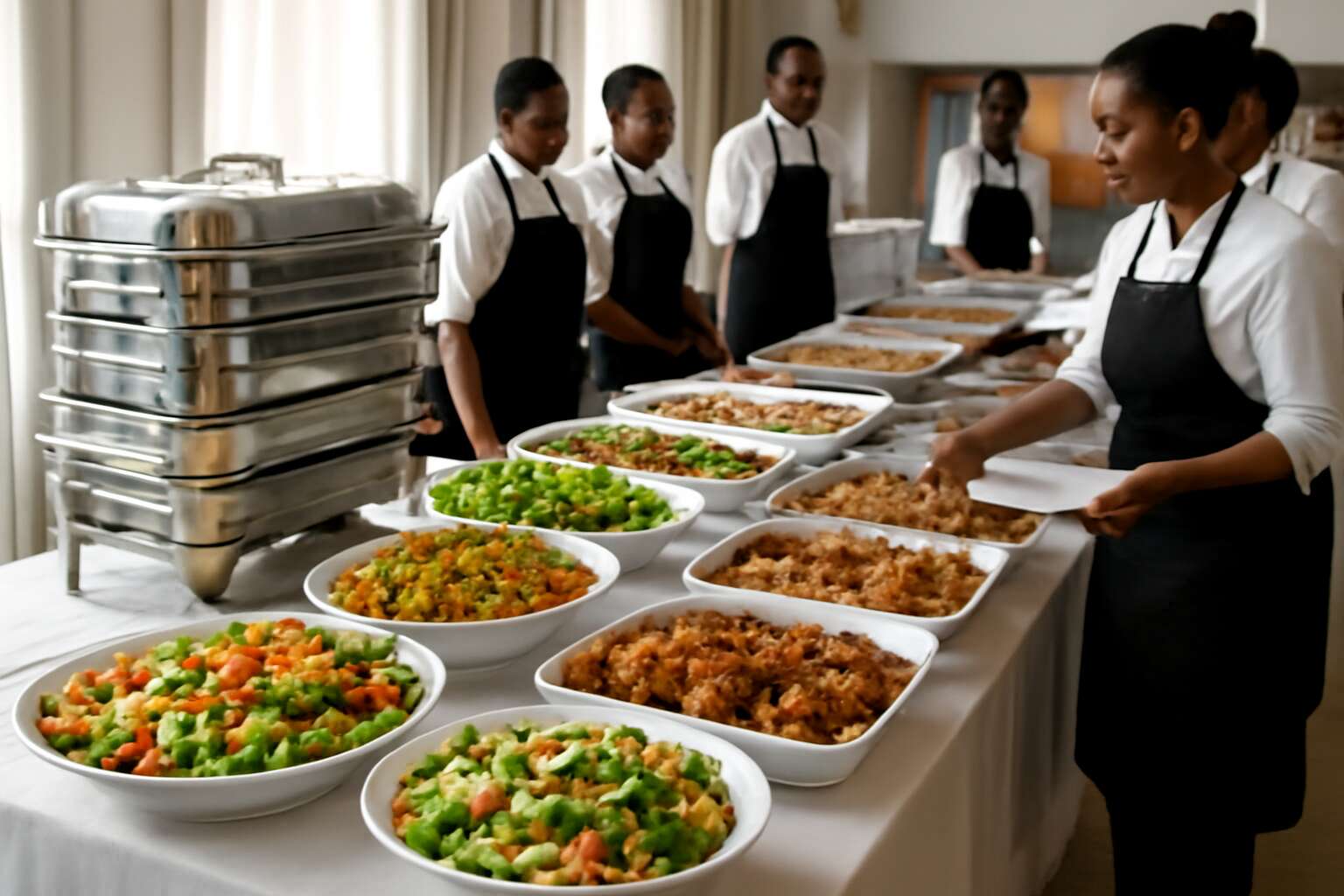
Understanding guest counts and dietary needs for 100 guests in South Africa
Estimating appetizers for a 100-person reception
In South Africa, a well-timed reception is a poem in motion, and the first bite often writes memory. More than 75% of planners say guest satisfaction hinges on that impression, underscoring why catering quantities for 100 south africa matter.
Understanding starts with counting heads and gauging dietary whispers. A clear headcount reduces waste, while noting dietary needs—vegetarian, vegan, halal, kosher, gluten-free, and allergy considerations—ensures every guest feels seen at the table.
- Vegetarian
- Vegan
- Halal
- Kosher
- Gluten-free
- Allergies
With those threads in hand, appetizers travel gracefully across tastes and traditions. In a 100-person South African setting, a few crowd-pleasers balanced with lighter bites create harmony rather than crowding.
Local charm blooms in small plates—charred corn with herb, peri-peri bites, and plant-forward selections—that honor trend and heritage without overwhelming the palate. The result is a thoughtful spread that feels effortless.
Main courses portions and proteins for a hundred guests
In my kitchen, a 100-guest South African affair becomes a test of rhythm; the room’s mood sways with each plate. A sharp headcount and honest dietary whispers keep the service smooth—because the main course is the handshake after the welcome drink. Catering quantities for 100 south africa hinge on protein and portions.
Dietary considerations form the quiet backbone of the menu. Vegetarian, vegan, halal, kosher, gluten-free, and allergies aren’t footnotes; they’re the main act behind every service.
- Vegetarian
- Vegan
- Halal
- Kosher
- Gluten-free
- Allergies
Main courses demand balanced heft: roughly 180–200 g of cooked protein per guest creates a satisfying center. If two proteins share the stage, aim for about 100–120 g per guest per protein, with starch and greens keeping tempo.
- Chicken: 180–200 g cooked per guest
- Beef: 200–250 g cooked per guest
- Snoek or salmon: 180–210 g cooked per guest
- Plant-based mains: legumes or tofu scaled to 180–220 g per guest
Side dishes and carb options for a large event
In a South African celebration, the room moves to the tempo of the table. A quiet truth surfaces: memories linger where carbohydrates meet flavor, not merely where proteins shine. For catering quantities for 100 south africa, understanding guest counts and dietary whispers shapes the menu’s pulse.
Side dishes and carb options set the tempo, giving guests something comforting to pair with the main acts. Here are anchors for large events:
- Pap (maize meal)
- Rice—basmati or pilaf
- Roasted or mashed potatoes
- Bread: roosterkoek or garlic loaf
Pairing texture with dietary needs keeps the room engaged—gluten-free grains, vegetarian, and halal options blend seamlessly as the evening unfolds.
Desserts and beverages planning for a hundred attendees
A surprising 70% of guests remember the dessert table long after the last toast. Desserts and beverages set the final tempo for a hundred guests in a South African celebration. When guest counts rise, sweetness and sip choices become as decisive as the main course, guiding portions, plating, and pacing. Understanding catering quantities for 100 south africa helps align chocolate dreams with tea-table chatter, ensuring no sweet tooth is left thirsting or overindulging.
To enchant the palate while staying precise, consider these beverage and dessert anchors:
- Non-alcoholic mocktails highlighted with rooibos and marula
- Chilled desserts such as sorbet, malva pudding shots, or custard cups
- Assorted beverages: still water, sparkling water, and herbal iced teas
Beyond the sugar and fizz, dietary whispers shape the bar and the dessert cart: gluten-free grains, dairy-free treats, halal-friendly options, and vegetarian indulgences blend seamlessly into the story!
Food quantity calculations and portion guides for South African events
Benchmark portion sizes per person by meal type
Portions matter. A miscalculated plate can mean wasted food or hungry guests in South African events where queues test patience and budgets alike.
When planning catering quantities for 100 south africa, use per-person benchmarks by meal type.
- Breakfast: 1–2 eggs or equivalent protein, 1 slice toast, fruit
- Lunch/dinner: 150–180 g cooked protein, 120–180 g starch, 100–150 g vegetables
- Dessert: 80–120 g
- Beverages: 250–350 ml per person
These figures keep service smooth and meals memorable without sacrificing value.
Adjusting for dietary restrictions and allergens
South Africa runs on a fine balance of hospitality and heat, and misjudged portions are the quickest route to a teetering event. Food quantity calculations and portion guides let service flow smoothly, so queues melt away and memories stay delicious rather than perfunctory.
Adjusting for dietary restrictions and allergens is more than courtesy—it’s competence. Expect vegetarian, halal, kosher, gluten-free, dairy-free, and nut-free needs, and craft parallel tracks so no guest feels secondary to the feast.
- Label clearly and segregate options to avoid cross-contamination
- Maintain separate utensils and prep areas for allergen-free choices
- Pair restricted-diet dishes with satisfying flavors to preserve variety
For readers planning catering quantities for 100 south africa, the principle remains: balance variety with precision, ensuring every plate reflects care and every guest leaves satisfied.
Buffet versus plated service impact on quantities
In a bustling city hall kitchen, portions are a living math, and the difference between a calm buffet and a crowded queue can hinge on a single plate. For catering quantities for 100 south africa, the choice between a buffet’s airy self-service and a plated service’s precise cadence defines the evening’s rhythm and the final plate that lands on each table.
- Buffet service typically requires a safety margin of about 15-25% more food to cover self-serve flow and inevitable depletion.
- Plated service enables tighter control, allowing you to trim margins without sacrificing variety or satisfaction.
- Replenishment strategy matters: stage stations and pre-portioned backups to keep portions even as guest counts shift.
South Africa reveals that care lives in the details—every bite carries a story, and accurate quantities help the story stay warm rather than hurried.
Wastage allowances and spoilage planning
South Africa’s event kitchens move like constellations under pressure; numbers anchor them. Catering quantities for 100 south africa are guided by margins, with industry data hinting at a 12% swing between projected needs and actual consumption.
Food quantity calculations become a quiet spellbook: set baseline portions, tailor for buffet or plated service, and weave in a wastage allowance to cover depletion and inevitable overages. Spoilage planning relies on strict cold chains, temperature control, and vigilant stock rotation to keep perishables pristine.
- Pre-portioned backups at strategic stations to cap overflows
- Stage stations for quick replenishment and controlled portions
- Real-time counts and palate adjustments to curb waste
When the numbers settle, the careful craft travels from kitchen to table as a warm, memorable ritual, not a hurried afterthought.
Practical menu planning and sourcing for large groups in SA
Seasonal ingredients and pricing in South Africa
Across South Africa’s event kitchens, a meticulously planned menu can trim waste and raise the room’s energy by a noticeable margin. Practical menu planning begins with a simple truth: two steady proteins, a comforting starch, and a canvas of seasonal vegetables. Sourcing from trusted local producers keeps flavor bright and costs predictable, even as guest counts climb toward a hundred.
- Seasonal procurement windows align with harvests, maximizing flavor and value.
- Local markets and co-ops offer price bands that rise and fall with the season.
- Pair staples with flexible proteins to absorb fluctuations without sacrificing elegance.
Seasonal ingredients and pricing in South Africa pivot with the harvest, yet smart planning turns that rhythm into savings. In-season carrots and leafy greens deliver depth at kinder costs; substitutions become artful choices rather than compromises. catering quantities for 100 south africa.
Sourcing local suppliers and wholesalers
In SA, feeding hundreds begins long before the RSVP. For catering quantities for 100 south africa, local sourcing is the heartbeat of a balanced menu. The goal: freshness and reliable costs.
Practical planning hinges on a lean supplier map: one trusted wholesaler and two markets within a day’s reach. Prioritize seasonal staples and flexible proteins to weather price swings without losing elegance.
- Build a local sourcing shortlist: one primary supplier, one backup.
- Confirm delivery windows that fit prep and service.
- Ask about lead times and bulk order quantities.
Wholesalers and co-ops can offer price bands that tighten with harvest calendars. Treat every order as part of a weekly rhythm, not a one-off, to preserve taste and budget.
Sample 100-guest menu with quantities breakdown
Large events demand mythic precision. The heartbeat is a lean supplier map and a menu that travels from prep to service. For catering quantities for 100 south africa, start with one trusted wholesaler and two markets within a day’s reach, focusing on seasonal staples and flexible proteins.
Here’s a pragmatic sample for a 100-guest event, with quantities broken down for smooth execution. It translates into practical catering quantities for 100 south africa.
- Starters: 200 portions total (≈2 per guest; 100 vegetarian, 100 meat).
- Main courses: 100 plated servings; 60 chicken or fish, 40 vegetarian.
- Sides: 200 portions (two sides per guest).
- Desserts and beverages: 100 desserts and 150 drinks.
With this scaffold, your kitchen glides from prep to service, keeping freshness and budget in balance.
Beverage service quantities and bar setup
Large-scale menus whisper like storm systems. In South Africa, where supply chains twist with the seasons, practical menu planning and savvy sourcing become the conductor. The phrase catering quantities for 100 south africa anchors the approach—every choice echoes across prep, service, and budget, turning chaos into choreography!
- Bar layout promotes smooth guest flow and fast restocks
- Glassware capacity and chilling reach aligned with peak times
- Non-alcoholic and simple options suited to SA palettes
Beverage service quantities and bar setup demand the same precision as plated courses. Consider footprint, sightlines, and stock levels so the bar runs like a well-oiled engine rather than a bottleneck.
By weaving seasonal staples with flexible proteins, budgets stay calm and flavors stay vibrant as the room breathes with conversation. The result is a kitchen that glides from prep to service—silent, efficient, a touch supernatural in its precision.
Packaging and serviceware considerations
Practical menu planning for large groups in South Africa hinges on flexibility and local sourcing. When mapping catering quantities for 100 south africa, menus weave seasonal staples with versatile proteins, balancing budget with flavor, and ensuring prep scales without distress.
Packaging and serviceware choices shape the final experience as guests move through the room.
- Recyclable wares that withstand SA heat and crowds
- Stackable, insulated containers for hot holding and speedy restocks
- Reusable systems with local rental partners to cut waste
In practice, these decisions echo the same care given to the plates, aligning aesthetics with practicality and sustainability.
Local suppliers across SA offer packaging that travels well from Cape Town to Bloemfontein, turning logistics into a choreographed routine. The right choices keep fruit bright, coffee hot, and dessert plates pristine, all while honoring seasonal pricing and wastage boundaries.
Cost-saving tips and vendor negotiation for 100-person events
Negotiating with caterers in South Africa and bulk discounts
Bold budgeting for a 100-person gathering begins before a single invoice is written. In South Africa, I’ve found that a savvy planner can trim 10–20% from the bill with flexible menus and early conversations with caterers, preserving flavor while tightening the purse strings.
Cost-saving tips and vendor negotiation strategies:
- Lock in bulk discounts by bundling core components (main, sides, dessert) into one quote.
- Choose locally grown, seasonal ingredients to cut transport and waste.
- Ask about flexible service styles and minimums that fit 100 guests without overproviding.
Bulk discounts are common when you negotiate with seasoned South African caterers. For catering quantities for 100 south africa, clarity on portion sizes and yield helps both sides.
When negotiating, I request a written, itemized proposal, precise minimums, and a clear timeline for substitutions—keeping the conversation respectful, yet sharp, like a well-tuned knife!
Understanding cost per head versus total budget
Clarity is the quiet edge in a crowded room. A seasoned SA caterer once quipped, “Clarity saves more than money.” For catering quantities for 100 south africa, understanding cost per head versus the total budget is the difference between smooth service and sticker shock. The true art lies in mapping charges—food, service, rentals, and contingencies—before the first bite lands.
Cost architecture matters more than price alone. When you compare proposals, the way a caterer folds fixed fees into a per-person figure often reveals value unseen in headline numbers. The most enduring savings come from recognizing how service style, beverage packages, and equipment rental influence the final tally—without losing the flavors that define the event’s memory.
DIY versus professional catering: when it makes sense
Hosting 100 guests is as much arithmetic as appetite, and cost-saving wears a sharp suit. In SA, it’s not unusual for up to 7% of buffet portions to be wasted—catering quantities for 100 south africa can guide crisp vendor negotiation and clear inclusions, keeping surprises at the door rather than on the bill.
Service style matters more than sticker price: plated elegance or easygoing buffets shift labor, equipment, and wastage forecasts. A thoughtful caterer folds those realities into one figure, which makes the comparison feel less like a lottery and more like a plan.
For DIY versus professional catering, the magic is in expectations: you gain control yet trade time, beverage logistics, and rental headaches for the steady rhythm of a team who knows the terrain.
Contingency planning and risk management for large events
Quantities decide rhythm as much as appetite in a 100-guest affair, and the ledger often forgives what the palate craves. A few deliberate choices turn potential waste into a well-choreographed experience, especially when venues in South Africa face fluctuating supplier prices and seasonal yields.
Cost-saving tips and vendor negotiation emerge as a quiet art: secure a transparent price framework, compare per-head versus all-inclusive packages, and lean on local, in-season ingredients. When planning catering quantities for 100 south africa, a precise headcount forecast becomes your strongest negotiating tool, reducing surprises on the bill.
Contingency planning and risk management for large events require the same discipline as menu math. Build in buffers for spoilage, weather hiccups, and transport delays, and hold alternate arrangements and favorable payment terms in reserve so the feast survives the unexpected.


0 Comments