Defining Your Event’s Dessert Needs
Assessing the Event Type and Formality
Every event demands a dessert selection that suits its character. For catering desserts to succeed, you must first define the scale and preferences of your gathering. Count your guests, note allergies, and decide whether you want plated elegance or a self-serve grazing board. A wedding of two hundred requires a different approach than a product launch for thirty.
- How many mouths will you feed?
- Which dietary restrictions are non-negotiable?
- Should the dessert be a course or a spectacle?
Assessing the event type and formality sharpens these answers. A black-tie gala demands refined petit fours and quiet indulgence. A corporate team lunch calls for easily shareable treats that don’t steal focus. The venue, the hour, and the guest list all communicate their needs. Listen closely, and your catering desserts will feel inevitable, not incidental.
Estimating Guest Count and Portions
Estimating guest count is the first arithmetic of catering desserts. One hundred guests does not mean one hundred portions of every sweet. Some will skip, some will double back. I always order ten percent extra for the indecisive. But that number shifts with the menu.
- Plated desserts: one portion per guest, plus five spares.
- Buffet style: three to four pieces per person across the spread.
- Dessert tables: aim for variety, not volume, per item.
Portion size depends on the richness. A dense chocolate torte cuts smaller than a light mousse. For catering desserts, consider the hour too. A lunchtime crowd eats less than a dinner crowd hoping to linger.
Aligning Desserts with the Seasonal Theme
In South Africa, December means scorching heat, and August means Cape winter winds. That difference should dictate every dessert you serve. Defining your event’s dessert needs starts with a clear picture of the evening’s rhythm. A cocktail event calls for bite-sized catering desserts that vanish between sips. A sit-down dinner demands something more deliberate.
The seasonal theme then shapes every choice. Summer events bring berries, peaches, and granadilla to the fore. Winter calls for warm puddings, malva pudding, and spiced things. When planning, consider these South African seasonal markers:
- Summer: fresh apricots, litchis, and citrus curd
- Winter: baked apples, cinnamon, and buttermilk
- Spring: rhubarb, strawberries, and mint
The right catering desserts feel obvious in hindsight; they fit the weather, the venue, and the mood without forcing attention.
Budgeting for Premium Dessert Offerings
Most event budgets set aside under ten percent for sweets, yet the dessert course is what guests photograph and remember. I have watched planners stare at spreadsheets that never seem to balance. A premium offering starts with honest arithmetic: seventy percent for ingredients, twenty for skilled labour, ten for presentation. That split shifts when you source local honey, free-range cream, or artisanal chocolate from a small Western Cape maker. Those ingredients have provenance. Provenance justifies a higher price per portion.
Your catering desserts brief should separate non-negotiables from nice-to-haves:
- Signature elements that anchor the menu
- Dietary accommodations that must be met
- Decoration that can be simplified without shame
Define those boundaries first, and the budget follows without panic. Premium catering desserts mean intentional, not extravagant. Get that right, and you have a dessert course guests will actually talk about!
Curating a Diverse and Crowd-Pleasing Menu
Balancing Classic Favorites with Innovative Flavors
According to a 2023 industry survey, seventy percent of event guests remember the dessert course more clearly than the savoury stations. That is why catering desserts deserve the same strategic thought as the main menu. The strongest menu holds familiar favourites while introducing one or two unexpected creations. A classic malva pudding with aged brandy sauce sits comfortably beside a rooibos panna cotta with honeycomb. Guests need that nostalgic reference point before they venture into the unfamiliar.
Offer variety without overwhelming the display:
- Two chocolate options, one dark and one milk
- A fruit-forward dessert for lighter palates
- A gluten-free choice that does not feel like an afterthought
- One textural surprise, such as a burnt caramel tart
This balance keeps the table approachable. I have watched catering desserts comfort, delight, and provoke a second glance, all in a single bite.
Incorporating Local and Seasonal Ingredients
When I build a dessert table, I start by asking local farmers what is ripe that week. The answer shapes everything else. A midwinter menu in the Cape might feature naartjie curd tarts beside a milk chocolate mousse infused with buchu. In summer, stone fruits and granadilla dominate. This approach makes catering desserts reflect what grows within the region.
Crowd pleasing does not require endless options. It requires intention. A short menu with regional cheese, fresh berries, and a single indulgence such as malva pudding satisfies more guests than a sprawling display. The harvest calendar shifts across provinces, so a menu planned for Johannesburg in April will not suit a coastal event in September. I have seen guests pause over a table that honours the season, then reach for the familiar comfort first. Local sourcing reduces costs, supports communities, and gives catering desserts a distinctly South African character. That freshness changes how each bite tastes.
Offering a Mix of Textures and Temperatures
Texture and temperature carry as much weight as flavour. When I plan catering desserts, I look for the contrast between a brittle shell and a soft centre. That contrast is what guests remember.
Consider a classic example: a warm chocolate fondant with a quenelle of clotted cream. The spoon cuts through the crust into the molten middle. It is simple, yet it performs.
On a grazing table, I might arrange:
- a cold granadilla tart beside a warm rooibos custard
- thin, crisp tuiles over a dense mousse
- soft meringues with a sharp frozen berry curd
Each pairing gives the guest a reason to pause. The mix makes a menu feel generous without adding more items.
Pairing Desserts with Beverages and Coffee
Pour the coffee before you plate the pudding. The sequence matters because taste follows temperature. For catering desserts, the beverage determines whether the sweet course lingers or fades. A single-origin coffee with honeyed notes can lift a milk tart, while a rooibos iced tea cuts the richness of a dark chocolate truffle.
My pairings focus on contrast and harmony:
- Hennessy cognac with a spiced malva pudding
- Espresso tonic beside a lemon posset
- Chilled hanepoot with a pecan and date slice
Each pairing gives the sweet course a destination. The glassware matters too. A wide-bowled cup allows the aroma to reach the nose before the palate. The right pour transforms catering desserts from a service into a performance.
Including a Centerpiece Dessert or Installation
A crowded table of catering desserts needs a structural focus. I have watched guests circle a spread for five minutes, uncertain where to start, until a towering croquembouche or a layered koeksister pyramid gives them a reference point. The centrepiece dessert is not decoration; it is navigation.
Build the menu around its profile. If the centrepiece is a rich Amarula mousse, offer lighter additions like citrus tarts and poached fruit. The supporting plates should contrast in textural density and sugar level. The centrepiece sets the tone!
- Select a centrepiece that serves 20% of the expected guest count.
- Arrange smaller items within one metre of the focal point.
- Reserve the tallest structure for the back, so sightlines remain clear.
Diversity here means offering something for the cautious eater and the adventurous palate, without letting any single flavour dominate the visual character of catering desserts.
Navigating Dietary Restrictions and Allergies
Identifying Common Allergens and Serving Safely
Navigating dietary restrictions at a dessert table is a delicate social dance. For catering desserts, the stakes feel higher because sweetness invites trust. A single hidden allergen can turn delight into distress. Common culprits include:
- Tree nuts and peanuts
- Dairy and lactose
- Gluten from wheat, barley, rye
- Eggs and soy
The savvy host labels every platter clearly and keeps serving spoons separate. In South Africa, where biltong and boerewors dominate the savoury side, dessert tables still face the same global allergen concerns. Communicate with your caterer about cross contamination. A small card next to each treat does more than inform; it shows respect.
Creating Gluten-Free and Vegan Options
When planning catering desserts, the guests avoiding gluten and dairy are not a small side note. They are central to the guest list. I have seen a single flourless chocolate cake ease every dietary worry in the room.
Creating gluten free and vegan options requires cleverness, not compromise. Coconut milk panna cotta, date sweetened brownies, and pecan based tart shells offer richness without wheat or butter. These sweets must stand firmly on their own texture and flavour.
Consider building a dessert board around:
- Macadamia and cacao truffles
- Citrus polenta cake with olive oil
- Chia seed mango mousse
This approach turns restrictions into inspiration. For any South African gathering, offering catering desserts that welcome everyone is a practical form of care. Your caterer can adapt, but only if you ask early.
Labeling and Communicating Ingredients Clearly
At a Cape Town wedding, a guest with a sesame allergy nearly skipped dessert because the buffet label read only “chocolate tart.” That moment showed me the true weight of words. Clear labeling on catering desserts is a safety net, not a formality.
Ingredient cards name every component, including oils and garnishes. When a server recites the same details from memory, guests relax. Pastry containing almond flour carries that fact on the label. Ganache made with coconut cream is described plainly.
South African events often mix English and Afrikaans. Bilingual labels prevent dangerous guesswork. The most successful dessert tables I have seen pair a bold dessert name with a full ingredient list underneath, so no one ever has to ask twice.
That clarity transforms a beautiful spread into a truly inclusive space.
Logistics and Display Strategies for Catering Staff
Coordinating with Catering Staff for Setup and Service
The service sequence determines guest satisfaction as much as the sugar content. Catering desserts require precise timing, from the first plate placed to the final crumb cleared. Your staff needs clear direction before guests arrive, not during service when the room fills with hungry chatter.
Display strategies matter beyond aesthetics. Position the centerpiece where it draws traffic, place finger foods at the edges for quick grabbing, and keep vulnerable items away from heat lamps. Arrange each station so no server crosses another’s path. Trust me, nobody needs a whipped cream collision mid-service.
Brief your team on the serving schedule. Some desserts must be plated immediately, others hold well. Assign one person to replenish the display while another manages the pass.
A practical list helps:
- Map the serving route before guests arrive
- Designate a runner for refills
- Set a signal for low-stock items
When the room fills, your catering desserts should look effortless. That impression comes from staff knowing exactly where to stand, what to carry, and when to step aside.
Choosing Appropriate Serving Ware and Display Stands
A wobbly stand can undo an entire dessert table in seconds. I have watched guests hesitate when a tiered stand wobbles under a loaded platter. Chilled desserts behave differently on metal, ceramic, and glass, so choose serving ware that matches what you are plating. Copper pulls heat from a mousse, while ceramic holds a stable temperature. For catering desserts at outdoor South African venues, weighted bases and non slip surfaces matter more than decorative trends.
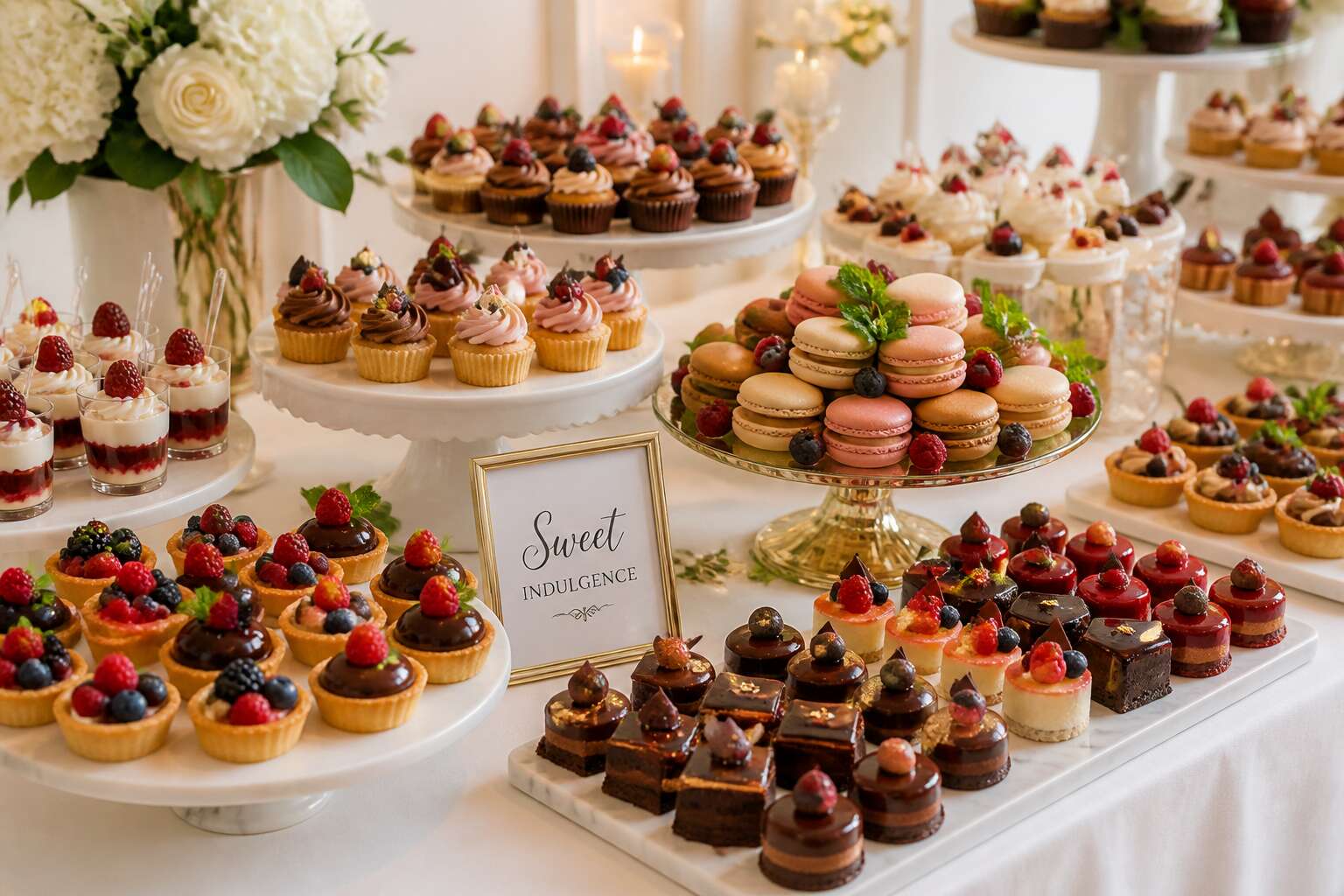
Display stands dictate how guests approach the table, and catering desserts look best when every tier is accessible. Low, wide platters encourage grazing, tall stands create focal points, and tiered stands let guests view every option without leaning. Keep each dessert within reach and match stand height to the serving utensil length.
- Stand weight capacity reveals itself only when fully loaded
- Heavier stands belong at the table’s center
- Spare serving ware prevents mid-service gaps
Maintaining Temperature and Freshness on Site
At a certain point, the only honest measure of a catering kitchen is how still the room feels when the doors open. The visible table is the conclusion of a longer, controlled process. Temperature and freshness are not maintained by hope; they are maintained by a deliberate sequence of actions that begin hours before the first guest arrives. The critical window is the last thirty minutes. That is when the final assembly happens, and it is when your staff must shift from preparers to guardians.
For catering desserts, the enemy is not time alone, it is the transition between environments. A chilled tart that rests on a warm counter for five minutes loses its structural integrity. The solution is a zone system. Designate a shaded staging area with portable coolers and insulated carriers. Only place items on the display table in small batches that match consumption speed. This requires staff to read the crowd, not just the clock. The rhythm of replenishment is a form of silent communication between the table and the kitchen.
When plating on site, keep components separate until the moment of service. A stabilised cream holds longer than a whipped cream folded into a mousse hours prior. Fruit should be added after the dessert is placed on the stand, not before. The visual appeal of a mirror glaze or a dusting of cocoa is lost the second condensation forms.
Service staging also demands a specific discipline. Use a numbered checklist for each station. Confirm the temperature of every carrier before loading. Assign one person to own the display table and reject any dish that leaks, slides, or dulls. The quiet choreography of moving empty platters and replacing them with full ones prevents the table from looking depleted. This is not about aesthetics alone; a barren table triggers a psychological scarcity response in guests, leading to rushed decisions and uneven distribution.
The handover of a dessert from your staff to a guest is the final test. Communication matters here more than manual dexterity. Staff must know which desserts contain which allergens and which ones need to be served with a specific sauce or accompaniment. This knowledge is the difference between a guest feeling accommodated and a guest feeling at risk. The logistics of temperature are pointless if the information about the dessert is not accurate. So, the back of house and the front of house must operate as a single organism. When that happens, the food on the plate is merely a reflection of the order behind it. And the table, for all its flourishes, is just the last visible proof of the unseen preparation that made it possible.
Planning for Easy Transport and Assembly
Planning for transport and assembly begins with a blunt audit of your vehicle and your staff. For catering desserts, the difference between a smooth delivery and a pastry-based catastrophe often comes down to how you pack the first box. Work backwards from the display table. Decide which desserts go on which tier, then pack them in reverse order so the first item you need is the last one loaded.
- Use rigid, stackable trays with locking lids for each tier level.
- Label each tray with the destination stand and the order of placement.
- Pack the heaviest items on the floor, the lightest on top.
Assembly should be a sequence of confirmations, not decisions. Assign one staff member to each stand and give them a diagram showing the final layout. They place the base, then the second tier, then the garnishes. No improvisation. If a dessert slides during transit, the fix is a sturdier carrier, not a pleading look at the venue manager. The goal is for the table to look as if it grew there, not as if it survived a car ride.
Setting Up a Self-Serve Dessert Table
A dessert table is a traffic system, not a still life. Guests approach from one side, take a plate, and move along the line. Staff should monitor the flow and replenish from behind the table. This keeps guests moving and prevents bottlenecks. Use a display that is tall at the back and low at the front. This allows guests to see everything without leaning over the table.
Small bites and finger desserts work better for self-serve stations. Items that require cutting or plating create friction. Pre-portion everything. Cupcakes, truffles, and mini tarts are easy to pick up with tongs. Provide a napkin or small plate at the start of the line. Place the least popular items first. Guests fill their plates early, so the first items will be picked first.
Consider the placement of the coffee station. If guests need to carry both a plate and a cup, they will struggle. Keep beverages near the edge of the dessert table or at a separate station. This reduces spills and keeps the table tidy. Staff should check the table every ten minutes. They should remove empty trays, wipe up crumbs, and rotate stock. This keeps the display looking intentional.
A self-serve dessert table requires a different mindset from plated service. The goal is to make it easy for guests to help themselves while keeping the display intact. The following steps help staff achieve this:
1. Position the table away from high traffic areas like doorways and bars.
2. Set up duplicate stations on opposite sides for large events.
3. Use warming lamps for items that need to stay at room temperature.
The table should look full from the moment guests arrive. A half empty table looks like an afterthought. Start with a generous display and replenish often. This creates a sense of abundance. It also gives the catering desserts a polished, professional look. The staff should understand that their role is to maintain the illusion of plenty, not to wait for requests.
Managing Refills and Waste Control
Managing refills is a game of prediction. Staff should watch which trays empty fastest and adjust the next batch accordingly. This prevents overstocking the catering desserts that guests ignore.
Waste control starts with smaller batches. Prepare half trays, then refill as needed. Keep a log of what gets thrown away. That data is gold for future events.
- Check temperature and texture every 30 minutes
- Move leftover items to the front of the display
- Separate damaged desserts immediately
Train staff to rotate stock consistently. The goal is to serve fresh items while using up what remains. This approach cuts waste without sacrificing appearance.
Elevating the Experience with Presentation and Details
Using Color and Height to Create Visual Appeal
Presentation transforms perception. When catering desserts, colour and height work together to guide each guest’s gaze. I have seen a single dark chocolate mousse become striking when placed on a white ceramic pedestal against a moss green wall! Height creates hierarchy, so alternate platters and risers. Use small edible flowers for a hint of crimson, then layer in shapes:
- Stack round cake boards with wooden dowels for an open, airy tower.
- Set small glass jars at varying heights among larger platters.
The interplay of warm and cool tones adds depth without extra effort. Lighting matters, test it before guests arrive. These details make catering desserts feel curated and deliberate.
Incorporating Custom Branding or Event Motifs
A dessert table that whispers the host’s name leaves a lasting impression. Custom branding transforms catering desserts from simple confectionery into a narrative woven through each display. Monogrammed chocolate medallions, embossed shortbread, or a fondant plaque bearing a family crest turn a beautiful spread into a personal story.
Event motifs can guide every decorative choice. A coastal wedding might feature sugared starfish and driftwood platters. A corporate gala could use laser cut logos standing among the sweets. For an elegant touch, consider these branded elements:
- Custom printed wafer paper toppers
- Engraved wooden picks or satin ribbons
- Molded chocolates with company initials
Each detail must harmonize with the theme without overwhelming the palate. When guests encounter a familiar emblem on a petite éclair, they feel a connection. That moment of recognition makes the entire spread feel intentional and exclusive.
Adding Garnishes and Finishing Touches
The last step often matters the most. Fresh berries, micro herbs, or a palmful of roasted nuts can transform catering desserts from simple sweets into polished finales. In South Africa, where marula fruit and rooibos offer local character, a garnish can speak to place without saying a word.
The finishing touch should always earn its place on the plate. On catering desserts, a smear of salted caramel, a dusting of cinnamon, or a single edible blossom adds texture and aroma. These details make the first bite feel deliberate.
- Citrus zest grated over a tart just before service
- Sea salt flakes on dark chocolate mousse
- A drizzle of honey or fruit coulis in a clean arc
I find that the most memorable plates carry one garnish that draws the eye without pulling focus from the dessert itself. A single buchu leaf, for example, hints at fynbos country without overwhelming the sweetness.
Providing Takeaway Packaging or Favors
There is a particular art to the takeaway box. In my experience, the most successful catering desserts end their evening in a small, sturdy container that guests can slip into a handbag without ceremony. It is not a leftover. It is a favor, a final gesture that extends the event by one breakfast.
Consider the packaging itself. A plain white box is practical, but a kraft sleeve tied with twine carries a certain Cape charm. For weddings or corporate functions, a branded sticker on the lid adds a quiet sense of occasion without shouting.
- Biscotti or rusks wrapped in wax paper
- Miniature malva puddings nestled in glass jars
- Chocolate bark dusted with rooibos, tucked into cellophane bags
The rule is simplicity. If the container requires instructions on how to open it, you have missed the point entirely.


0 Comments