Planning Your Event Menu
Assessing Guest Count and Preferences
Most hosts underestimate how much food their guests actually eat. South African parties often see half the platters returned untouched, while the braai meat disappears in the first hour. That imbalance comes from guessing instead of planning. A proper count starts with RSVPs, but children, plus-ones, and the friend who arrives with three extra people shift the numbers. You need a buffer of ten percent, not a leap from the headcount.
Preference is trickier than quantity. A crowd of thirty will include vegetarians, people watching their salt intake, and at least one guest who cannot eat gluten. Party catering succeeds when these factors shape the menu:
- Halaal and kosher requirements, common in many South African households
- Children under twelve, who eat less but need simpler food
- The time of day, since lunch and evening events have different appetites
A generic spread ignores these realities, and the leftovers pile up.
Balancing Flavors and Textures
The psychology of a memorable plate is contrast. A spread where every dish shares the same texture creates a strange fatigue, one guests cannot name. They simply stop eating. Party catering works when flavors and textures perform together. The smoky intensity of braai meat demands something bright and acidic. The softness of pap needs a crunchy slaw. That tension makes each bite feel deliberate.
- A crisp element to reset the palate between rich bites
- A smooth or creamy component for comfort
- A tangy or pickled item to cut through oil
- A charred or roasted note for depth
This is not about pleasing everyone. It is about giving each palate a reason to return to the table. Guests may not notice the balance, but they feel it. That feeling translates to empty platters and satisfied silences around the fire.
Seasonal and Local Ingredient Ideas
The Cape autumn surrenders pomegranates and quince just as the fire needs something tart. Planning your event menu around what grows within a province shortens the distance between soil and table.
For a Karoo lamb braai, source wild rosemary and sour figs. Coastal parties call for snoek, line caught when the southeaster drops. This is not import ingenuity; it is attention.
- Winter: beetroot, sweet potato, and citrus from the Eastern Cape
- Spring: asparagus, peas, and waterblommetjies from the Western Cape
- Summer: peaches, tomatoes, and melons from Limpopo
Party catering becomes a conversation with the season. Guests taste the place itself, and that memory lingers longer than any garnish.
Interactive Food Stations
An event without a focal point is merely a gathering of famished strangers. The interactive food station solves this social conundrum by giving guests a reason to congregate, converse, and collaborate on their plates. It transforms the dining room into a theatre of appetite, where the performance is the assembly of the meal itself. This approach injects a level of engagement that a plated dinner, for all its elegance, simply cannot match.
Consider the logistics of the flow. A well-placed station can divert traffic from the bar and encourage mingling among guests who might otherwise remain in their cliques. The scent of searing meat or fresh herbs acts as a homing beacon. You are not just feeding people; you are providing a shared activity. For a truly memorable experience, the station should offer a degree of customisation. A guest who builds their own bunny chow or selects their own curry toppings feels a sense of ownership over their meal.
The variety is the lifeblood of this concept. You might offer a live pasta station where the dough is rolled before their eyes, or a carving trolley with a specific sauce selection.
- Build-your-own taco bar with slow-braised beef and fresh salsas
- Gourmet burger station with a selection of artisanal cheeses
- Interactive sushi rolling table for the more adventurous crowd
- Dessert crepe station with seasonal fruit and chocolate sauces
This format also solves the perennial problem of dietary restrictions. Guests can choose their own path, avoiding allergens without making a fuss. It removes the burden from your waitstaff and places the control firmly in the hands of the diner. The memory of the event becomes tied to the fun of the creation, not just the consumption. This is the essence of modern party catering, where the meal is a performance and the guests are the co-stars.
Beverage Pairing and Bar Setup
Guests may forget the starter, but they rarely forget a signature cocktail. The bar sets the tone for the entire event. For party catering, the beverage pairing should mirror the menu’s personality. A spicy curry calls for a crisp lager, while a slow-roasted lamb begs for a bold red. Offer a self-serve station with pre-mixed pitchers to reduce wait times. Consider these crowd-pleasers:
- Gin and tonic with rosemary and grapefruit
- Mulled wine for cooler evenings
- Non-alcoholic sparkling rooibos iced tea
The setup matters too. Place the bar away from the food queue to avoid bottlenecks. Stock enough ice, glassware, and a backup bottle of something neutral. A thoughtful bar setup turns a simple party into a seamless experience.
Dessert Tables and Sweet Endings
The sweetest farewell is a well-laid table. For party catering, the dessert table is where the evening lingers. It is a closing scene, not a rushed afterthought. Offer small bites that invite grazing, such as milk tart shooters, malva pudding truffles, and koeksister skewers. This keeps guests mingling instead of queuing for plates.
Your display should feel effortless, but planning is key. Choose treats that hold their shape for hours. Consider a mix of textures and temperatures, like chilled lemon mousse beside warm spiced nuts. Guests often judge the whole event by that final sweet moment, so let the table shimmer with modest abundance.
- Mini vetkoek with cinnamon sugar
- Rooibos caramel tarts
- Grilled pineapple and cream
The queue moves naturally when the spread is patient. Those last bites become the story your guests carry home.
Choosing the Right Catering Style
Buffet vs. Plated Service
A survey of 200 event planners at the Durban Week showed 68 percent grant a plated meal a higher delight score. That stat does not rule everything. A buffet hands control to the guest, allowing them to loop back for a seasoned ostrich or a second scoop. It suits an outdoor braai or a weekend gathering. Yet the queue can stretch, and that delay drains the room’s temper.
Plated service operates on a different engine. Each plate falls into place, one portion per guest, all at the same second. The correct choice depends on your party catering budget.
- Pick a buffet if your arrival order stays uncertain.
- Pick a plated main if your roster is locked and the walkthrough is timed.
The style itself matters less than the flow between the station and the chair. That is the true measure of your party catering!
Food Trucks and Mobile Catering
Roughly 40 percent of event planners now consider a food truck for their next gathering. That number comes from a Cape Town industry poll, and it points to a truth: wheels add looseness to a party catering plan. A truck parks, opens its hatch, and the scent does the advertising. No chafing dishes, no plated synchronisation, no queue stretching toward the horizon. The food comes to the guest, which changes the flow.
Mobile catering trades one problem for another. Power supply, generator noise, and the width of your driveway all become part of the equation. Check three things before you commit:
- Your venue’s policy on open flames and vehicle access
- The truck’s menu flexibility for guests with dietary restrictions
- The backup plan if the truck breaks down during the event
A polished truck with a broken fryer serves nothing. That is the quiet art of party catering.
Family-Style Dining
The most honest moment in South African party catering happens when the first platter hits the table. Family-style dining is a test of trust between the host and the kitchen. Unlike a buffet where guests queue with plates, or a plated service where portions are fixed, this style sends shared dishes to the table. It removes the formality of individual courses.
The food becomes the icebreaker, but it also loads the host with a new set of decisions. You need to account for the portions. A buffet can absorb the slack of a heavy eater. Family-style cannot. If the slow-braised lamb is gone, the conversation shifts to a hungry table. Add one substantial starch bowl per four guests, and you hedge against that gap.
This approach works well when the guest list has a cohesive identity. It fails when you mix strangers with specific dietary needs. A vegan at a table sharing a single platter of peri-peri chicken feels the friction immediately. Check the dietary alignments before you settle on this format. For a mixed crowd, consider a hybrid where half the dishes are shared, and the rest are plated.
Some ground rules make the service smoother. Keep the platters heavy enough to stay warm. Ensure the table has the physical space for four bowls and a wine bottle. The passing of dishes gets clumsy on a narrow table. A final note is to serve the dishes in courses, not all at once. A table overwhelmed with food is a table that stops talking.
Here are a few rules of thumb for this style:
– Count one shared platter for every two to three guests.
– Keep the menu to three dishes; no more.
– Label the dishes with tiny cards for those with allergies.
A platter of bobotie with sambals, a crisp green salad, and a pot of rice can anchor a meal without theatrics. The style succeeds because it presumes generosity, not perfection. It is a party catering choice that asks guests to participate in the serving, which turns a meal into a moment of collaboration. For smaller gatherings, this format is often the most memorable; it gives the event a tactile energy that a standard buffet lacks. The family-style table works if you trust your portions and know your crowd. Otherwise, that shared platter becomes a contested territory. Serve the food warm, pass it early, and let the rhythm of the table handle the rest.
Grazing Tables and Finger Foods
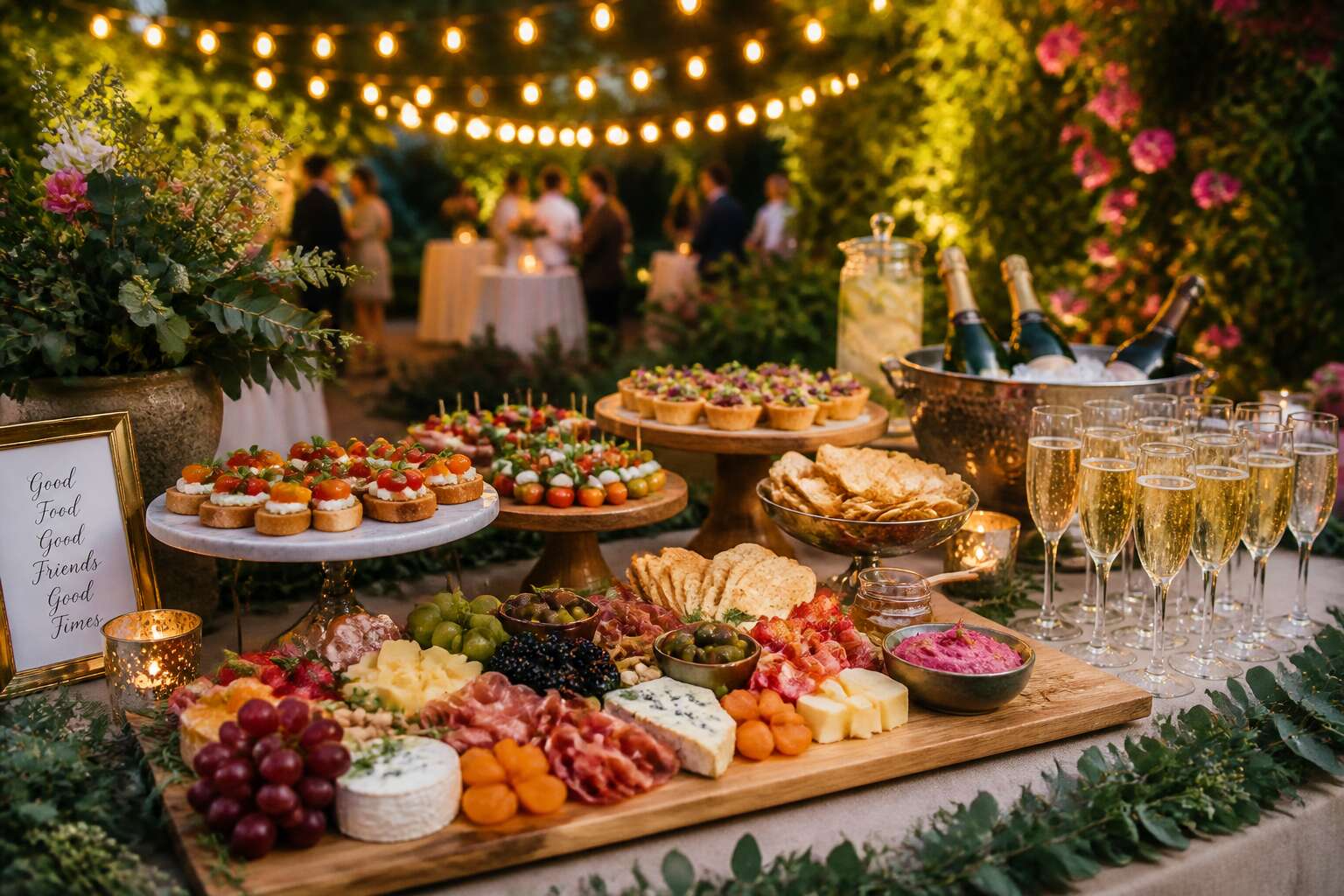
Grazing tables present food as a spread on a central surface. Guests move around it and select what they want. The arrangement needs boards, bowls, and height variation. Include biltong, droëwors, cheese, fruit, and roasted vegetables. I keep items bite-sized. Finger foods offer a similar experience but with more mobility. A skewer lets guests hold food and a glass at the same time.
This style works for corporate mixers and birthday parties. It keeps the flow open and reduces the need for waitstaff. For party catering, grazing tables and finger foods simplify service and let guests control portions. Count two to three bites per person per hour! Offer a vegetarian option and label allergens.
- Choose grazing tables for a fixed spread.
- Choose finger foods for easy movement.
- Use both for extended events.
Budgeting and Cost Control
Per-Person Pricing Structures
Party catering budgets demand precision! Per-person pricing structures offer that precision, assigning a fixed cost to every guest. This rate typically covers food, basic labour, and essential equipment. However, many caterers exclude the following from their base quote:
- Beverage packages and specialty drinks
- Staffing overtime for extended hours
- Rental upgrades like linen or tableware
These exclusions can inflate your total unexpectedly. Always request a detailed breakdown from your caterer. Compare line items across quotes, not just the final number. A low base rate may conceal higher add-ons. For a gathering of fifty, a modest per-person rate can escalate quickly when hidden costs emerge. Mastering per-person pricing gives you control over your expenditure, transforming the chaotic process of budgeting into a manageable calculation.
Hidden Fees and Service Charges
The service charge line on a party catering quote deserves more suspicion than the base rate. Many South African caterers add a 10% to 15% service fee that never reaches the staff. This gratuity can appear as a separate line item or get folded into the per-person rate. Ask your caterer directly whether the service charge covers staff wages or acts as a tip. I have seen quotes where this single line added thousands of rand to a modest gathering.
Some venues impose a cakeage fee for outside desserts. Others charge for ice, water, or coffee refills after a certain hour. These small line items accumulate quickly. A quote that appears competitive on paper may carry a 20% surcharge once all service fees surface. Scrutinise every line. Request a full list of charges before signing. The difference between a transparent quote and a vague estimate can determine whether your event stays within budget.
Ways to Reduce Expenses Without Sacrificing Quality
Party catering costs rise quickly when every dish feels essential. A shorter menu with robust flavours costs less and impresses more. Choose proteins like chicken thighs or lamb neck over fillet, and use seasonal vegetables from local suppliers.
I always request a quote based on plated portions rather than buffet portions. Portion control lowers the per-person price. Negotiate the number of serving staff, especially for self-service elements.
- Ask for a dry run of the menu to identify unnecessary components.
- Confirm that your venue allows you to bring your own beverages.
- Book your party catering on a weekday to access lower rates.
Review your event schedule. A two hour window uses fewer staff hours and less rental time. A five course meal becomes a three course meal with a richer dessert. Reduce expenses while keeping the experience full.
Coordinating With Your Caterer
Timeline and Delivery Scheduling
Timing in party catering is the invisible architecture upon which the whole event rests. You can have a menu of sublime complexity and a venue draped in finery, but if the food arrives late or the equipment lands in the wrong loading bay, the magic dissolves into chaos. Many people plan the menu and the guest list with obsessive care, yet treat the delivery schedule as an afterthought, a loose arrangement that will simply sort itself out. This is a recipe for disaster.
The caterer’s timeline is not merely a list of times, it is a choreography of ovens, coolers, and vehicles. You must negotiate a delivery window that accounts for the venue’s access points, especially in older Johannesburg or Cape Town buildings where service elevators are small and slow. A clear, written schedule should specify when the team arrives, when the hot food is plated, and when the final garnish goes on. Your event’s rhythm depends on this precision.
A seamless flow on the day relies on a shared understanding of logistics. Consider the physical path from the caterer’s van to your table. If the kitchen is on a different floor, or the entrance is a narrow garden path, the delivery will take longer than anyone expects. Traffic in and around our major cities is unpredictable, and load-shedding can affect refrigeration schedules. Your coordination must include a contingency plan for these realities.
For a typical afternoon event, the delivery sequence often looks like this:
1. Confirm the exact arrival time for the main crew and the equipment truck, usually two hours before guests arrive.
2. Schedule the drop-off of cold items and beverages first, allowing for proper chilling and setup.
3. Time the arrival of hot dishes to coincide with the service start, preventing them from drying out under heat lamps.
4. Arrange for a final walk-through with the lead caterer thirty minutes before doors open to address any last-minute concerns.
This level of detail ensures that the partnership between your vision and their execution produces a seamless experience for your guests. The coordination is a quiet, unseen force, but it is the backbone of excellent party catering. When the event ends, the breakdown and collection of equipment should also be mapped out, ensuring the venue is left tidy and the caterer’s team can exit efficiently without disrupting your final moments.
Rental Equipment and Linens
Most event disasters trace back to a single handshake agreement. A verbal nod about extra chairs. A vague assurance about tablecloths. Party catering stands on these fragile promises. The caterer, the rental company, and the venue form a triangle of dependencies. When one corner shifts, everything tilts.
The linens deserve more attention than they receive. A tablecloth is not a decoration. It is a surface that absorbs spills, anchors the visual theme, and dictates the mood of every table. Cotton blends resist creasing. Polyester handles red wine with grace. Linen napkins, though elegant, require starching and careful folding. Your caterer can advise on the right fabric for your venue’s lighting and the season’s humidity. Johannesburg’s Highveld air dries fabric stiff. Cape Town’s coastal moisture makes certain materials cling. This is the kind of nuance that separates professional party catering from amateur efforts.
Equipment coordination follows the same logic. The caterer brings chafing dishes and carving boards. The rental company supplies glassware and crockery. These lists must merge into one document. Overlapping items create invoice errors. Missing items create panic. A simple spreadsheet comparing both inventories prevents both outcomes. Someone must own this document; the caterer is the natural custodian, since they already manage the timeline and understand the tempo of party catering from prep to plate.
I have watched caterers unpack a van only to discover the venue promised “extras” that never materialised. The promise was sincere. The execution failed. This is why written confirmation matters. A rental company works from paper, not memory.
The phrase “just a party” underestimates the machinery behind it. Party catering involves generators for outdoor setups. It involves portable fridges for chilled ingredients and backup burners for unexpected equipment failure. Most South African venues, from Franschhoek wine estates to Sandton hotel ballrooms, have specific protocols. The caterer navigates these. The client should not have to.
Environmental factors complicate equipment choices. An outdoor garden wedding in Stellenbosch demands weighted stands for chafing dishes. A winter function in Pretoria needs heat lamps that the rental company must source separately from the caterer’s usual order. The caterer’s quote rarely includes these items. Ask early. A rental company can source almost anything if given time. Last-minute requests carry surcharges. This holds true across the board in party catering, where logistics are as perishable as the food.
The relationship between caterer and rental supplier functions best when both parties know each other. Established caterers maintain preferred suppliers. These partnerships produce smoother events because the two teams have rehearsed the flow before. Newer caterers might use multiple vendors. Nothing wrong with that, but coordination becomes the client’s burden. Better to let the caterer manage their own network.
Deposits and bookings need equal vigilance. The caterer books the equipment. The client signs the confirmation. Two signatures protect everyone. A deposit secures the gear. Payment terms sit in writing, not in the exchange of pleasantries over the phone. Good paper prevents good people from becoming adversaries when something goes missing.
Staffing and Attire
Quiet moments in party catering happen when staff move as one. Plates arrive on time. Glasses refill unnoticed. Clear coordination with your caterer over staffing drives this. A basic ratio stands: one waiter per ten guests for plated service, one per fifteen for buffets. South African events blur these lines. A rooftop cocktail hour plus a garden dinner demands both capacities. Ask how they staff transitions. The answer reveals their party catering experience.
Attire follows function. The team should match the venue without sacrificing practicality. A black waistcoat suits a Sandton ballroom. Crisp white shirts work on a Durban beach. Denim has no place. Confirm if the caterer supplies uniforms or the venue enforces a dress code. I have seen a barefoot waiter in a Cape Town vineyard and a formally dressed team sweating through a Pretoria afternoon.
With your caterer, settle these details:
- Exact staff numbers and assigned zones.
- Who handles bar service versus table service.
- Attire for kitchen and front of house.
Back-of-House Requirements
Somewhere between the third canapé and the first dance, a war is waged in a cramped, temporary kitchen. This is the back-of-house, the engine room of your entire party catering operation. It is loud, hot, and gloriously unglamorous. The guests will never see it, but they will absolutely feel its effects when a perfectly timed lamb chop lands on their plate. Your caterer’s skill here is the difference between a seamless evening and a chaotic scramble that resembles a food fight at a family reunion.
The back-of-house is not just about stoves and fridges. It is about logistics, space planning, and a protocol that keeps the flow of dirty dishes separate from clean ones. Hygiene audits happen here. Allergies are flagged here. The dance between the front-of-house and the kitchen is a delicate one, and it hinges on basic communication. You should not be orchestrating this on the day. Instead, ask your caterer for a specific floor plan for their mobile kitchen unit. Discuss where the grease traps go. Confirm how they handle waste removal. If they look at you blankly when you mention a grease trap, you might be in trouble.
The best caterers have a checklist for this madness. A standard one might look like this:
– Confirm the provision of a dedicated power supply.
– Identify water access points and drainage solutions.
– Establish a clear pathway for food delivery and equipment setup.
– Negotiate the parking details for their delivery vehicles.
– Specify the clean-up schedule for the kitchen area.
Do not leave these details to chance. A caterer who knows what they are doing will arrive hours early to set up their mobile unit, and they will have a plan for the chaotic final hour before guests arrive. They will also have a strict protocol for the safe storage of leftovers. Discuss this. Unsold food and unused ingredients are a cost factor for them, but their disposal and donation policies should be transparent. In South Africa, where food security is a pressing issue, a caterer who partners with a local charity for food recovery is a gem. That speaks volumes about their business ethics and their experience in professional party catering.
The invisible crew will also handle the delicate art of plating in high volume. You need to know if the dishes are plated to order or if they are pre-plated and held. Holding food changes its texture and temperature. A caterer who holds food for too long is a danger to your event’s reputation. You can ask about their searing and finishing techniques on site. If they mention induction burners and finishing stations, you have found a professional. If they mention keeping things warm in a bain-marie, you should start worrying. This coordination with your caterer is about trust, but trust is verified through these specific questions. It is the only way to ensure the engine room operates without a fire.
Weather Contingency Plans
In a country where a blue sky can turn to a Cape storm within an hour, weather is the variable that undoes most party catering plans. Your caterer should have a named contingency for sudden wind, heat, or downpour. That plan must be shared with you before the event, not discovered when the first gust arrives.
Ask about the physical setup. Where do they anchor the serving stations? What happens to the open flames if the wind turns? How do they protect plated food from a rapid temperature drop? A seasoned catering team will answer these without hesitating.
- Confirm the backup location for the buffet, if the outdoor space becomes unusable.
- Ask how they secure tents and marquees without damaging the venue’s lawn.
- Verify that their staff has a protocol for moving guests’ drinks indoors before the rain starts.
These details shape the difference between a polished event and a chaotic scramble. Insist on a written weather plan. Your guests will never know how close they came to a rain-soaked canapé, and that is precisely the point.
Dietary Accommodations and Special Requests
Vegetarian and Vegan Options
According to a recent survey, nearly one in three South Africans now identifies as flexitarian. Your party catering must therefore treat vegetarian and vegan options as a core component, not a garnish. It is a matter of balancing taste, texture, and nutrition without leaning on cheese or cream.
Consider these dishes for a plant-based spread:
- Roasted butternut and chickpea curry
- Grilled halloumi with citrus salsa
- Mushroom and lentil bobotie
Each option should stand alone, offering the same depth of flavour as its meaty counterpart. A skilled caterer will craft these with care, ensuring your party catering earns a reputation for inclusivity and good taste.
Gluten-Free and Allergen Awareness
Food allergies are not a lifestyle choice. They are a medical reality that shapes how guests interact with a menu. For party catering in South Africa, where wheat, dairy, and nuts appear in countless traditional dishes, the margin for error is slim. A single crumb can send a guest to the hospital.
The caterer’s role is to ask the right questions before the event. This means checking for gluten intolerance, nut allergies, and shellfish sensitivities during the booking process. It also means designing a menu where gluten-free options are not an afterthought. A dedicated preparation area, separate utensils, and clear labelling on the buffet line are non-negotiable.
Consider the common culprits:
- Wheat and barley in sauces and marinades
- Peanuts and tree nuts in desserts and salads
- Shellfish in seafood platters
- Dairy in dressings and baked goods
When a caterer treats allergen awareness as a structural part of the kitchen, the event runs smoother. That is the quiet work that makes party catering memorable for the right reasons.
Kid-Friendly Meals
Kids at parties can be the toughest critics. Their palates are honest, and their hunger is unpredictable. A menu that ignores younger guests creates a problem for parents who must soothe a hangry child. Party catering in South Africa benefits from a designated children’s table or a separate kid-friendly buffet line.
The best approach involves asking about specific dietary needs during booking. Children with allergies or religious requirements need the same attention as adults. Many families request simple proteins, plain starches, and fruit platters.
Common child-friendly requests include:
– Mini burgers without complicated sauces
– Mac and cheese with a mild cheddar blend
– Chicken strips with a honey mustard dip
– Fresh fruit skewers and vegetable sticks
A caterer who anticipates these requests ensures that parents relax and children eat. That balance defines successful party catering.
Cultural and Religious Considerations
In South Africa, a guest list often carries the weight of diverse faiths. Party catering that acknowledges these traditions transforms a gathering from mere event to shared respect. This means asking direct questions about religious dietary requirements during the booking conversation. A caterer should know whether a family requires halal certification, kosher standards, or Jain abstention from root vegetables.
Common cultural requests include:
– Halal meat sourced and prepared according to Islamic law
– Kosher meals with separate utensils for meat and dairy
– Hindu menus that avoid beef and may favour vegetarian dishes
– Christian fasting periods that call for simpler, meat-free plates
These accommodations demand genuine attention. The caterer who handles them with quiet competence allows every guest to eat without explanation. That quiet ease is the hallmark of professional party catering.


0 Comments