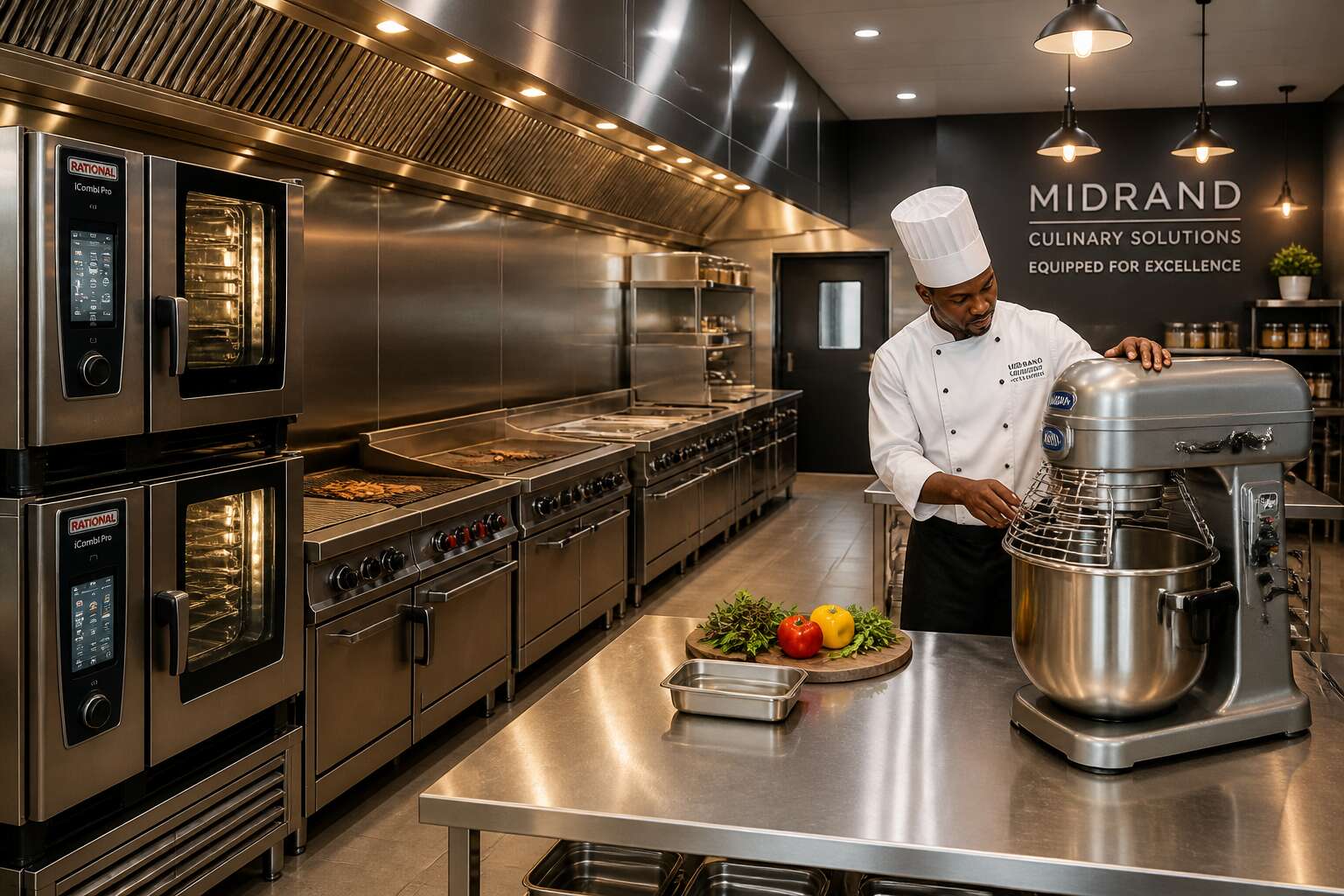
Understanding the Local Catering Equipment Market
Why Midrand Is a Strategic Hub for Caterers
Midrand sits at a geographic crossroads, with the N1 and N4 cutting through its heart. This position gives caterers access to suppliers and clients across Gauteng without the congestion of central Johannesburg. Understanding the local market means recognising that demand here is driven by corporate campuses, conference venues, and private functions. Suppliers of catering equipment midrand must respond to quick turnover times and varied menu requirements.
A useful way to gauge the market is to note what moves fastest:
– Griddles and combi ovens lead sales.
– Stainless steel prep tables are constant stock items.
– High volume beverage machines surge during event season.
The area’s logistics advantage also lowers delivery costs, which matters when outfitting a kitchen on a deadline. Local caterers increasingly source from nearby suppliers to reduce downtime. That makes catering equipment midrand a practical choice for operations that value reliability.
Types of Equipment Demanded by Midrand Venues
Midrand venues rarely run the same menu twice in a week. That unpredictability shapes every equipment order, and it keeps suppliers on their toes! A conference centre might need rapid-fire plating stations in the morning, then a slow braise setup for an evening gala. Suppliers of catering equipment midrand see this churn and respond with versatile, mobile units that can be repositioned between service zones.
Two categories dominate venue requests. First, equipment that handles batch cooking under time pressure, such as pressure braising pans and combi steamer ovens. Second, gear that supports service flow, including heated pass-through cabinets and insulated carriers. Venue managers also ask for modular refrigeration that can expand with event size without occupying permanent floor space.
Typical orders from Midrand venues include:
- Countertop fryers with fast recovery times
- Blast chillers for short-order prep
- Under-counter ice makers for beverage stations
The steady preference is for compact footprints with high output. Space is precious in these kitchens, yet the volume of covers keeps climbing. Catering equipment midrand meets that pressure with durability built into every hinge and handle.
Sourcing vs Renting Equipment in Midrand
Every chef in Midrand confronts a quiet decision when weighing an equipment order. Ownership fixes your identity. Rental frees your cash flow. The venue that rents gains flexibility, but it also surrenders control over maintenance schedules and temperature calibration.
Sourcing catering equipment midrand through outright purchase suits operators with predictable menus and stable demand. Renting suits those chasing seasonal surges or one-off events. I have watched kitchens stall because a hired combi oven arrived with a faulty probe. A clear-eyed approach weighs downtime costs against storage costs.
Consider what each event truly demands. One venue may thrive with a permanent blast chiller; another cannot justify that capital for a single gala dinner. The decision is less about money and more about your tolerance for uncertainty. Suppliers of catering equipment midrand often offer rental fleets, yet the fine print governs everything.
Key Categories of Commercial Catering Equipment
Cooking Appliances for High-Volume Kitchens
When a single service must plate 400 plates in two hours, cooking appliances become the difference between profit and loss. High-volume kitchens rely on machines built for continuous output. Combi ovens combine steam and dry heat, allowing one unit to roast, bake, and regenerate hundreds of portions. Tilting bratt pans handle soups, stews, and bulk frying without losing temperature. Heavy-duty gas ranges deliver raw heat for wok cooking and large pot work.
The right catering equipment midrand suppliers stock these appliances in sizes that match actual demand. A 20-tray combi oven serves a different operation than a 6-tray unit, and that difference matters!
- Thermostatic controls with precise temperature bands
- Heavy-grade stainless steel bodies for daily sanitisation
- Removable internal racks for quick cleaning between services
Any catering equipment midrand operation depends on spare parts availability as much as the machine itself. Midrand’s location ensures rapid after-sales support, a practical advantage for high-volume operations.
Refrigeration and Cold Storage Solutions
While cooking appliances handle the fury of service, a kitchen’s refrigerated section is the quiet gatekeeper of quality and safety. In Midrand’s warm climate, cold storage is not a luxury; it is the first line of defense against spoilage and costly waste. Catering equipment midrand suppliers offer a range of units designed for rapid stock turnover, from reach-in chillers for daily prep to walk-in cold rooms for bulk deliveries. The choice of refrigeration directly affects inventory management, and the right sizing prevents energy inefficiency or overcrowded shelves.
Midrand’s strategic location near major transport routes provides a distinct advantage for caterers. Large events demand precise temperature control from the moment ingredients arrive. Blast chillers are particularly valuable here, bringing cooked food through the danger zone quickly and safely. For operations that handle multiple functions daily, having dependable holding units ensures dishes remain at perfect serving temperature without drying out.
Events in Midrand often require confident food safety protocols. A well-designed cold storage setup includes:
– Dedicated units for raw proteins and finished dishes to prevent cross-contamination
– Temperature monitoring systems that deliver accurate, real-time data
– Reliable ice machines that drain between cycles for optimal hygiene
Old, failing refrigeration is a liability that no venue can afford. Reliable units allow caterers to focus on the event itself, not on stressful temperature checks. Consider how the cold chain supports you, from the supplier’s truck to the plate. That is where catering equipment midrand really proves its value. Purchasing robust cold storage is an operational decision that keeps your service efficient and your reputation intact.
Food Preparation Tools and Utensils
Food preparation tools set the pace for every service. Midrand caterers depend on catering equipment midrand suppliers to deliver durable utensils that survive constant washing and heavy daily use. Weak blades and flimsy boards slow the entire brigade.
A well-equipped prep station includes:
- High-carbon stainless steel chef knives with ergonomic handles
- Colour-coded cutting boards for allergen separation
- Heavy-duty mixing bowls and measuring scoops
- Mandolines and box graters for uniform cuts
Preparation is where margins are won or lost. Precise tools reduce waste and speed up service. Good equipment turns a chaotic morning into a steady, productive session.
Serving and Buffet Equipment
The buffet line is where your kitchen’s work meets the public. Serving equipment needs to hold temperatures, protect food, and stay presentable for hours. Midrand caterers rely on catering equipment midrand suppliers who understand the pace of events. A chafing dish that fails halfway through a function ruins more than dinner.
Think about the basics: chafing fuel must burn clean, bain-maries keep sauces at safe heat, and serving spoons with hooks prevent mess. One weak hinge on a buffet lid can stop service cold. Design matters here more than in any other category.
- Insulated drop-in chafing dishes with adjustable vents
- Electric bain-maries with separate thermostats
- Juice dispensers with drip trays
- Tilted serving platters for gravies
These pieces endure constant opening and closing during service. The right catering equipment midrand ensures the line moves smoothly, from the first guest to the last.
Factors to Consider When Choosing Equipment in Midrand
Compliance with South African Health and Safety Standards
When you purchase catering equipment midrand, compliance with South African health and safety standards is non negotiable. The Occupational Health and Safety Act, alongside municipal bylaws, demands rigorous attention to material grades, electrical certifications, and cleaning protocols.
I often tell clients to verify the SABS mark and confirm that stainless steel is food grade. Without these checks, you risk fines, temporary closures, or contamination incidents. The local authorities in Midrand expect proof of conformity during routine inspections.
- Approved electrical ratings for high wattage units
- Non porous surfaces that resist bacterial growth
- Adequate ventilation for gas powered appliances
Each factor carries real weight in your daily operations. Your reputation depends on equipment that meets these standards, not just on paper but in practical, hygienic performance.
Energy Efficiency and Operating Costs
Energy efficiency rarely tops the list when buyers scan catering equipment midrand, yet it determines monthly overheads more than the purchase price ever will. A single convection oven running eight hours a day can consume as much power as an entire household in Midrand. The real cost appears on the municipal statement, month after month.
In this region, where electricity tariffs climb steadily and load shedding forces reliance on generators, every watt counts. I have seen kitchens where poor insulation leaks cold air from fridges, forcing compressors to work harder. Gas units burn fuel inefficiently when burners lack proper adjustment.
- The energy efficiency class assigned to each appliance
- Standby power consumption when equipment idles
- Heat output that increases cooling load in the kitchen
Operating costs include maintenance schedules, spare part availability, and the lifespan of heating elements. Catering equipment midrand suppliers who offer energy efficient models help clients control these variables.
Space Constraints and Kitchen Layout
Few caterers measure their doorways before buying equipment. In Midrand, that mistake ends with equipment stranded in a loading dock. Venues here range from converted houses to shopping centre units.
I have seen kitchens where a walk-in freezer was purchased without measuring the passageway. That equipment never made it inside. Awkward corners, low ceilings and narrow doorways become the real obstacles.
Workflow matters as much as physical fit. Every unit of catering equipment midrand should sit within reach of its supporting station. Prep surfaces align with cooking lines. Wash bays sit close enough to avoid crossing traffic.
Verify these before purchase:
- Door widths and lift access
- Clearance for ventilation and service
- Floor load ratings for basement kitchens
When selecting catering equipment midrand, the layout must accommodate both machines and staff. A cramped kitchen slows service and creates hazards.
After-Sales Support and Maintenance
When the last crate is unloaded and the units are in place, the relationship with your supplier enters its true test. In Midrand, where many venues operate from repurposed buildings, equipment failures do not wait for convenient hours. I have watched kitchens lose an entire service over a part that took three weeks to ship.
After-sales support determines whether a broken combi oven becomes a minor lapse or a cancelled function. Ask about response times for callouts. Confirm which components carry warranties beyond the standard twelve months. Find out whether the technician has experience with your specific make.
A useful maintenance checklist covers:
– Scheduled servicing intervals for gas and electrical fittings
– Calibration checks for thermostats and timers
– Replacement parts availability for older catering equipment midrand
Purchasing catering equipment midrand without this information leaves you with an expensive silhouette in the kitchen. The seller’s willingness to answer these questions tells you more than any brochure.
Budgeting and Financing Options
The price tag on a commercial oven tells only part of the story. In Midrand, where venues range from established event spaces to scrappy new startups, the real question is how the purchase fits into your cash flow. I have watched owners buy the cheapest catering equipment midrand has to offer, only to spend double on repairs within a year.
Budgeting requires honesty about your usage patterns. A unit that runs twelve hours a day needs a different grade of machinery than one used twice a week. That distinction separates a smart purchase from a costly mistake.
Financing options vary widely:
– Supplier instalment plans often carry zero interest for the first six months
– Bank asset finance spreads the cost over two to five years
– Section 12B tax deductions on energy-efficient equipment can soften the burden
Each option changes your total cost of ownership. When you source catering equipment midrand, the difference often outweighs the sticker price.
Top Suppliers and Showrooms in Midrand
Evaluating Local Equipment Dealers
Suppliers in Midrand often put on an impressive display. A walk into a showroom might dazzle you with polished chrome and promises. But evaluating local equipment dealers requires more than admiring display models. You need to poke at hinges, open every door, and ask about spare parts. Ask about delivery timelines, not merely the sticker price. A dealer who stocks common consumables locally beats one who must order from Johannesburg for a week.
- Warranty terms that cover commercial use
- Service technicians within a 20km radius
- Proof of trade references from nearby caterers
Some showrooms in Midrand have working kitchens for demos. Others have dusty shelves. The best catering equipment midrand dealers will let you run a test batch. They understand that your hob must survive a Saturday wedding rush. Ignore the salesman’s patter and watch how staff handle a returned item. That tells you more than any brochure.
Benefits of Visiting Showrooms Before Buying
In Midrand, a showroom visit separates serious buyers from window shoppers. The leading dealers keep operational display kitchens rather than static displays. You can open oven doors, inspect weld seams, and compare how different catering equipment midrand suppliers build their units.
Running a test batch in a showroom kitchen reveals hot spots and recovery times that no specification sheet captures. You also see the physical size of a unit in context, which matters when your prep area is 12 square metres.
When you tour a showroom, pay attention to these signals:
- The stock of spare parts on the shelves. Fast-moving consumables in stock mean less downtime.
- Whether staff demonstrate equipment or merely read from a catalogue.
A supplier who lets you run your own trial batch in Midrand has confidence in their stock. You cannot buy that confidence online.
Online Ordering and Delivery in the Midrand Area
A single delayed delivery can disrupt an entire function. Some Midrand suppliers handle online orders with remarkable speed. Their portals display current stock, live prices, and delivery slots that fit your schedule. I have ordered spare parts after closing time and received them before breakfast service the next morning. That reliability comes from local warehousing, not guesswork.
When evaluating online ordering options, look for these markers:
- Clear return policies for damaged goods
- Delivery tracking that works beyond Gauteng
- Live chat staff who know equipment specifications
A showroom still matters for large purchases, yet the best catering equipment midrand dealers combine that physical presence with efficient digital fulfilment. They understand that your schedule does not pause for supplier hours. Delivery to Midrand venues often happens within 24 hours, provided the item is in stock. Some suppliers offer after-hours drop-off for venues without loading docks.
Trends and Innovations in Catering Equipment
Smart Kitchen Technology
The modern Midrand kitchen is becoming a sensor-rich environment. Smart ovens now self-calibrate based on load, while refrigeration units send temperature alerts directly to a manager’s phone. This shift from manual oversight to machine-led diagnostics reduces human error, which matters when you’re serving hundreds of guests.
I’ve seen operators in Midrand adopt cloud-based inventory systems that track usage in real time. The result is less waste and more precise ordering. Consider what’s gaining traction:
- AI-driven cooking cycles that adjust humidity and heat
- Predictive maintenance alerts for compressors and fans
- Usage analytics to forecast peak demand
These features are no longer futuristic. For anyone sourcing catering equipment midrand, understanding these trends is essential to avoid buying soon-to-be-obsolete units. The smart kitchen doesn’t replace your chefs, it frees them to focus on taste rather than temperature probes.
Eco-Friendly and Sustainable Equipment
The pursuit of sustainability is no longer a matter of simple compliance; it has become a true marker of operational intelligence. For those acquiring catering equipment midrand, the new standard is a refined symbiosis between performance and planetary stewardship. We have seen a decisive move away from disposable culture toward units engineered for longevity, a shift that appeals to the ethos of the modern restaurateur.
Energy systems are at the heart of this evolution. Consider the rise of induction cooktops, which channel power directly into the pan with negligible loss. Contrast that with the latent inefficiency of older gas models that heat the entire room. Similarly, modern combi-ovens now feature intelligent water management and heat recovery modules, reusing energy that would otherwise dissipate into the exhaust hood. The visible result is a significant reduction in the utility bill, but the hidden benefit is the reduced strain on municipal infrastructure.
Material innovation is also rewriting the rulebook for kitchen fit-outs. Surfaces are now fabricated from recycled alloys and post-consumer composites, offering the durability of steel without the environmental debt. When you evaluate the lifecycle of these products, the initial capital outlay reveals itself as an investment in future-proofing.
– Advanced insulation foams that maintain cold chains with less compressor activity.
– Modular refrigeration systems designed for component replacement, not whole-unit disposal.
– Water-saving pre-rinse spray valves that cut consumption by half.
These elements are becoming the baseline for the conscientious buyer. In Midrand, where growth is rapid, the choice to invest in green technology is a deliberate statement of intent. It signals to a discerning clientele that the establishment values more than just profit margins. The kitchen becomes a place where ethics and economics coalesce, creating a model for the rest of the industry to follow.
Modular and Space-Saving Designs
Modular configurations are reshaping how Midrand kitchens use every square meter. Chefs now assemble workstations from interchangeable units instead of wrestling with bulky, single-purpose machines. A cooking suite can expand with a griddle plate or swap a fryer for a pasta cooker as the menu evolves.
This approach thrives in tight city venues where space is at a premium. Vertical stackable ovens and under-counter blast chillers free up floor area without sacrificing output. The logistics of sourcing catering equipment midrand become simpler when pieces ship compactly and fit through standard doorways.
Consider what modular systems commonly include:
– Base units on locking castors for reconfiguration
– Drop-in hot wells and chilled inserts with universal cutouts
– Interchangeable attachments for mixers and processors
A kitchen that adapts overnight is no longer a luxury. It is the standard for venues in this fast-growing hub. Smart purchasing of catering equipment midrand means choosing systems that grow with the business.
Induction Cooking vs Gas
Induction cooking has moved from a novelty to a serious contender in Midrand kitchens. The debate against gas is no longer about nostalgia. It is about measurable outcomes. Induction responds instantly, delivers precise temperatures, and leaves no combustion residue in the air. Gas remains beloved for its raw power and familiarity, especially in high-volume catering where chefs trust an open flame.
Sourcing catering equipment midrand now means weighing these tradeoffs against ventilation costs and utility rates. Induction units reduce cooling loads, while gas infrastructure demands ducting and safety checks. Some venues adopt a hybrid strategy:
- Induction for sauces, delicate proteins, and rapid simmering
- Gas for wok tossing and char-intensive searing
Both technologies coexist comfortably in modern layouts, giving chefs flexibility without compromising speed.
Ventilation and Exhaust Systems
Ventilation systems in Midrand kitchens are no longer an afterthought. Modern exhaust hoods now respond to actual cooking activity. Sensors detect smoke, steam, and heat, then adjust fan speed automatically.
This matters for catering equipment midrand buyers. Ventilation costs often exceed appliance costs over a kitchen’s lifetime. Energy recovery units capture heat from exhaust air and use it to warm incoming fresh air. In Midrand’s climate, that trims utility bills noticeably.
Another shift is island-style extraction. Chef units with built-in downdraft ventilation handle high-volume cooking without bulky overhead canopy hoods. Three gains:
- Lower ceiling height requirements for retrofits
- Cleaner sightlines for open kitchen layouts
- Reduced noise near pass stations
I have also seen more operators demand filterless systems, though those require strict daily cleaning routines.
Safety Features and Ergonomics
Nobody walks into a catering equipment Midrand supplier hoping to lose a fingertip. Yet for decades, professional kitchens tolerated poorly guarded blades and awkward handles. That era is ending, driven by insurance premiums and chefs who prefer their hands intact!
Modern units include automatic shutoffs when temperatures spike, cool-touch exteriors, and snag-free handles. Ergonomics have improved too. Height-adjustable prep tables and tilting mixing bowls reduce back strain, a concern for staff on their feet all day.
Some innovations seem small but work wonders:
- Spring-loaded oven racks that don’t dump a roast onto your shoes
- Blades with retractable guards that actually stay retracted
- Control panels placed at elbow level, not ankle level
These features do more than protect employees. I have seen them cut sick days, slow staff turnover, and keep the health inspector from scribbling angry notes. Safety and ergonomics are selling points, not afterthoughts.



0 Comments